A garden is always a series of losses set against a few triumphs, like life itself – May Sarton
I began this blog in the summer of 2019. My gardening and life experiences definitely echo May Sarton’s words!
You can subscribe below to get notified when I post new updates.
If you’ve been reading my blogs from the start, you’ll have got to know the characters, but if you’re a new reader, here’s a crib sheet:
Rambling Rose – me! Grumbling Rose – my husband Rosie – our daughter Daisy – her wife Little Bud – their son/our grandson Lily – our dog Victoria & Albert – our lovely next-door neighbours Sweet Pea – their cat
For the past few weeks I’ve been getting a bit depressed about the state of my garden. The grass needed cutting again, but was still very wet. The plants in my pots were starting to look limp and frankly manky and a frost was imminent. I’d been trying to find a window of opportunity to put things right but my time had been eaten up. In addition to my weekly writing group, I’ve been attending night school with GR to learn some psychology (we still don’t understand each other) and in my wisdom I decided to learn Greek, in an attempt to preserve my aging brain. So quite a bit of homework to do. Oh, and did I mention I’m writing a second book – come to think of it, I don’t think I’ve mentioned my first book to you. They’re about my family history and the latest one is in the final stages before going to print, so it’s been quite an intensive period. Also Little Bud should be renamed Little Bug because he is picking up every bug going, now he’s at nursery school. Unfortunately his latest lurgy was particularly horrible, meaning he couldn’t go to nursery for a week – so additional days of Granny care was required.
I suffer from Raynaud’s which is a little inconvenient for a gardener in winter. I have to retreat indoors once my fingers have turned a deathly white and are devoid of any feeling. I’ve tried everything to resolve this – thermal gloves, handwarmers, mittens, fingerless mittens impregnated with silver, fingerless mittens that go up to your elbows – nothing does the job. GR has ordered me some heated gloves which will be great for winter walks, but they’ll be too cumbersome for doing gardening jobs that require dexterity.
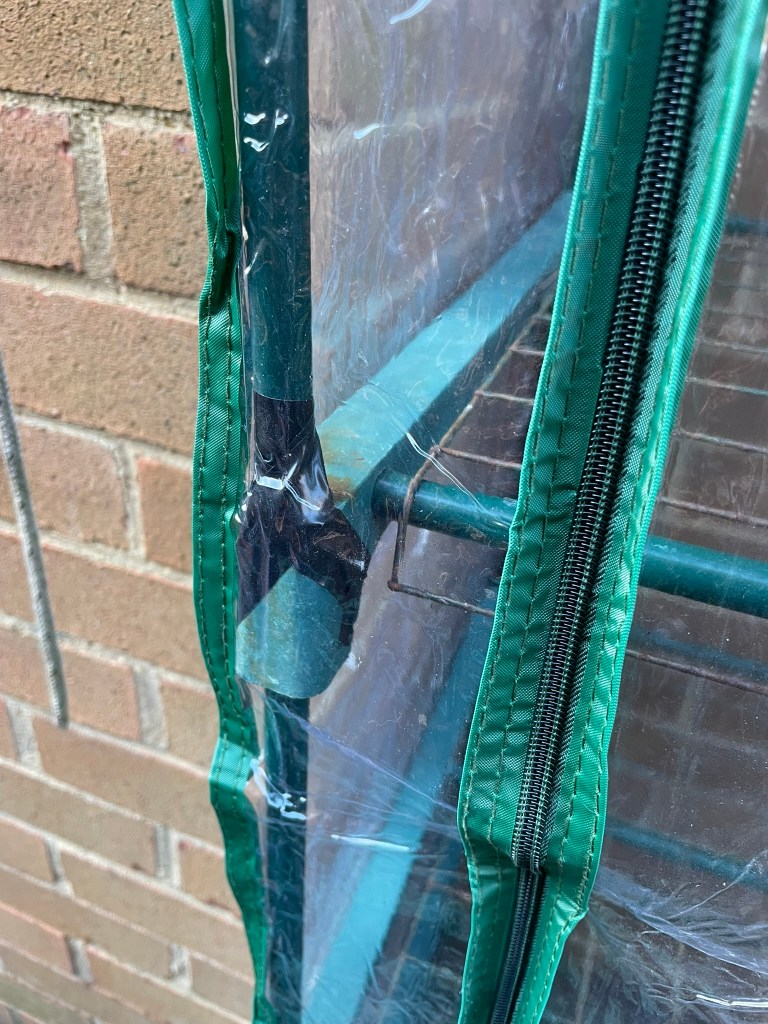
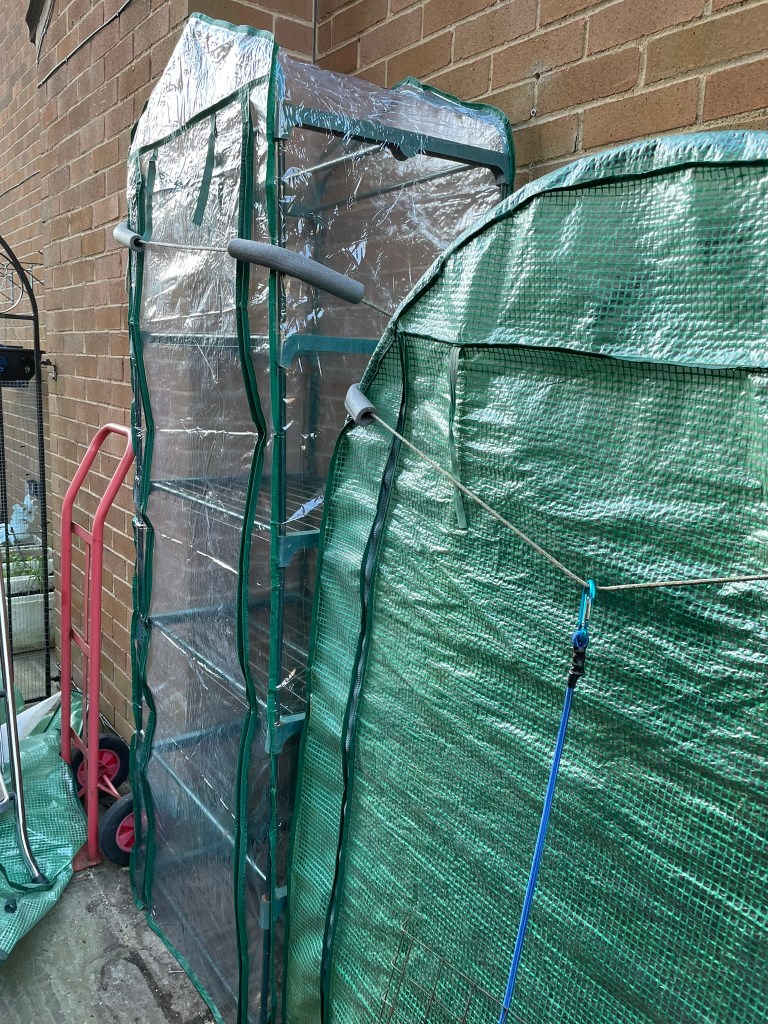
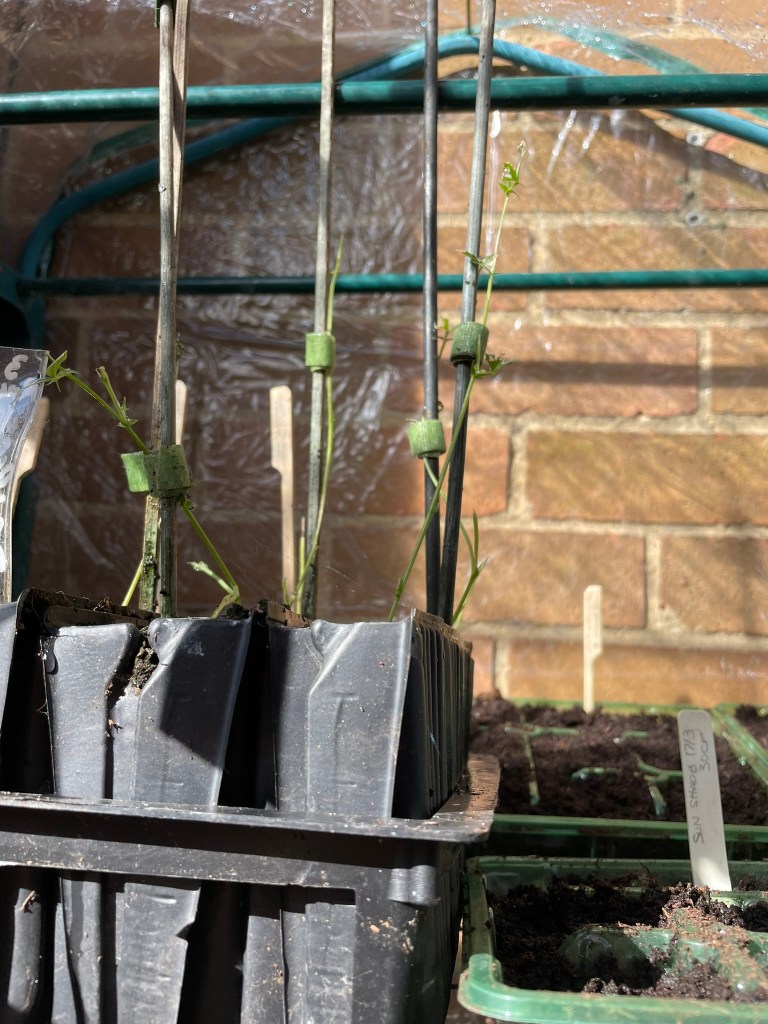
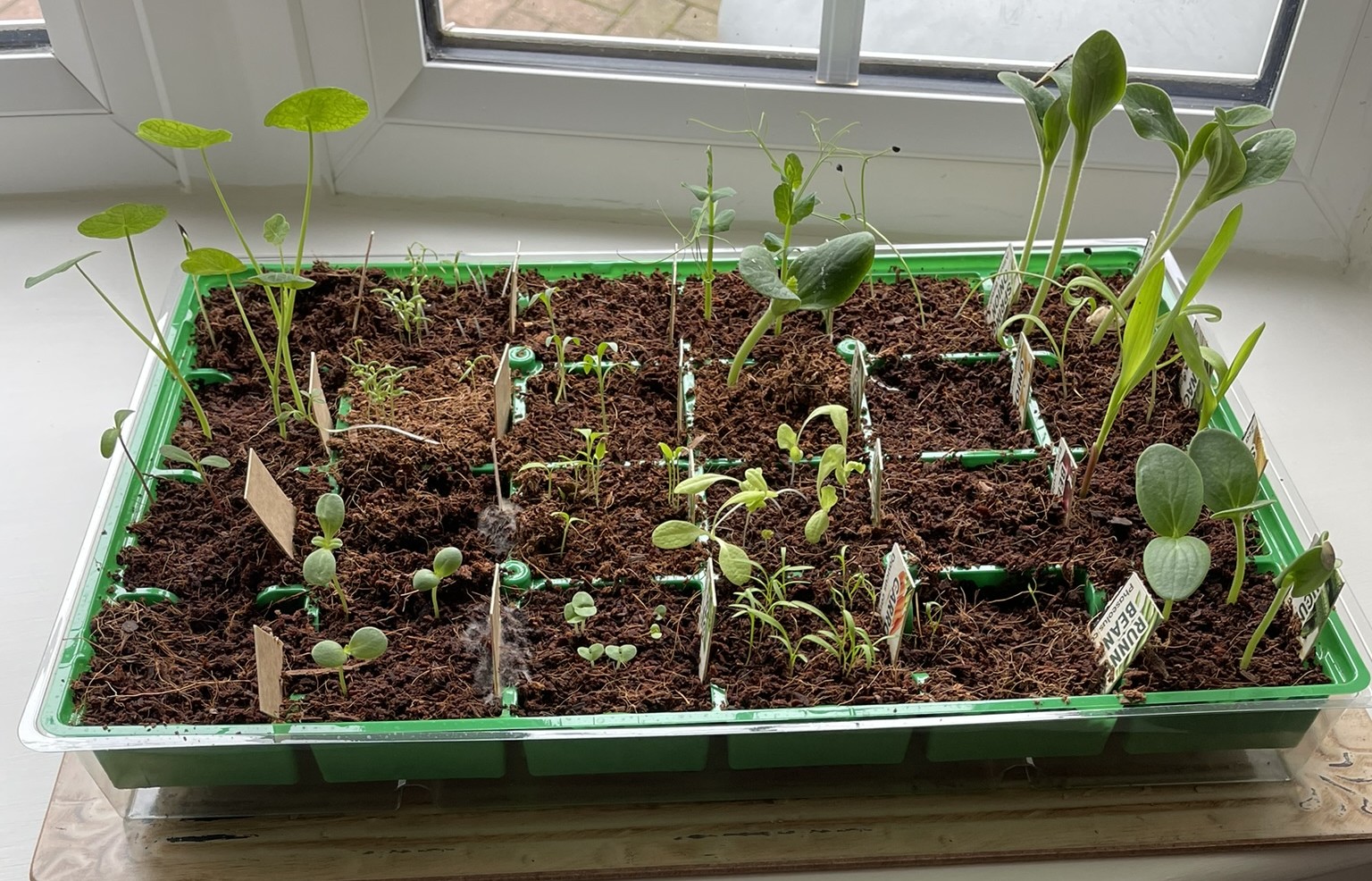
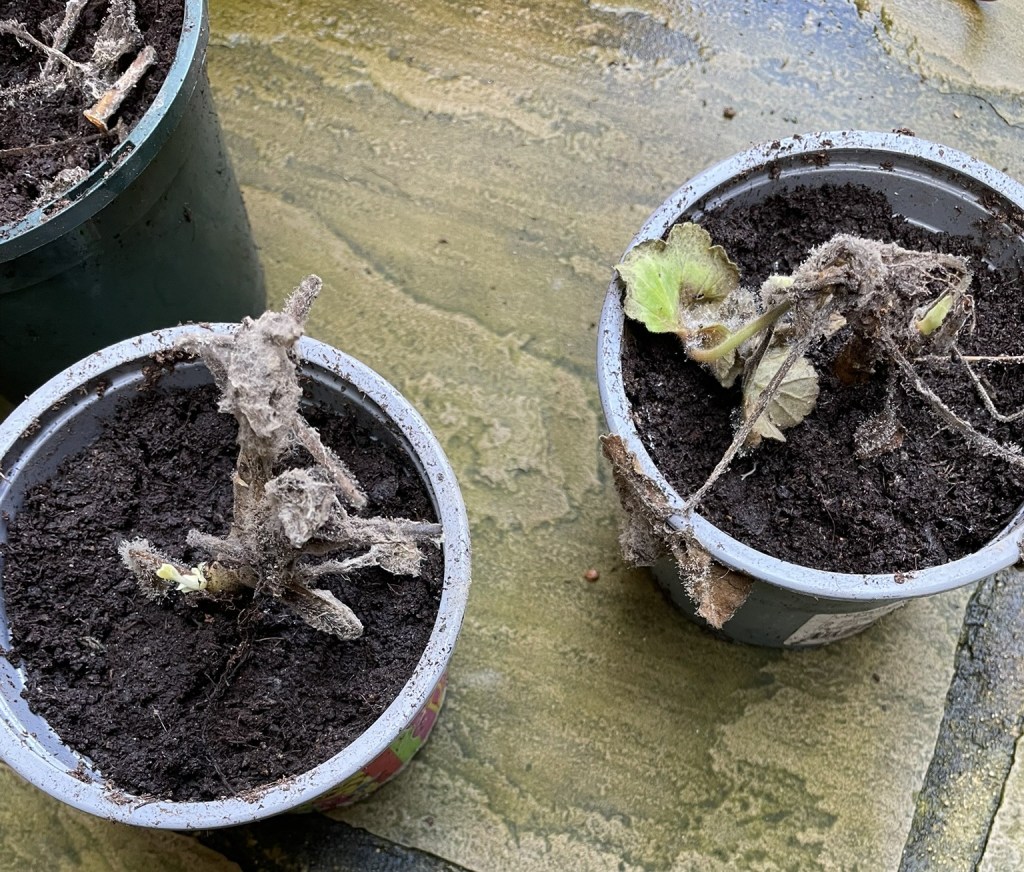
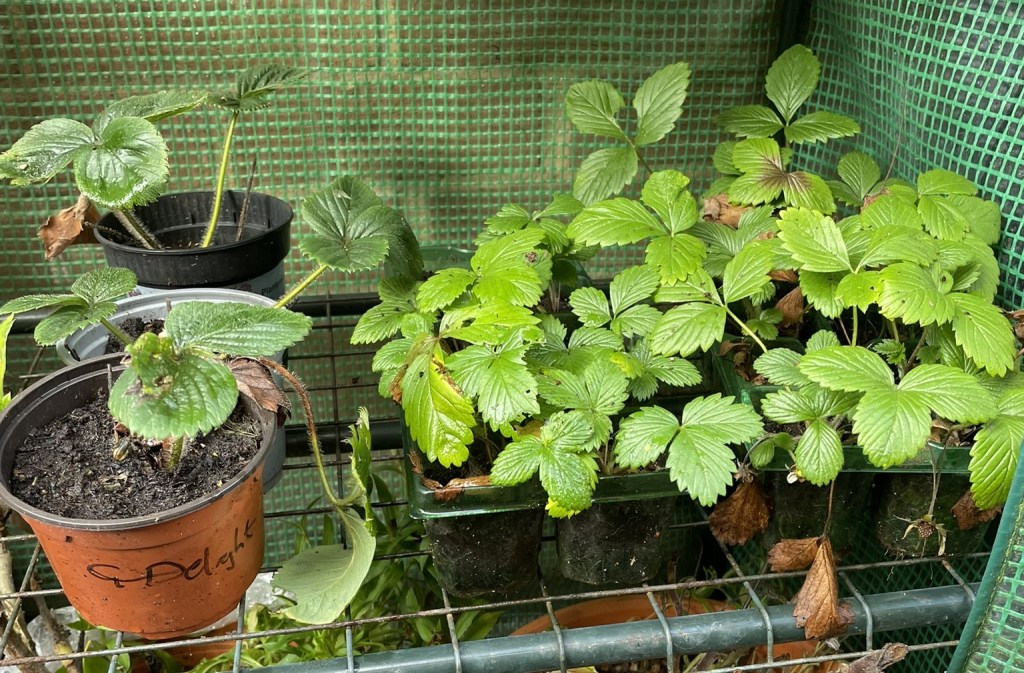
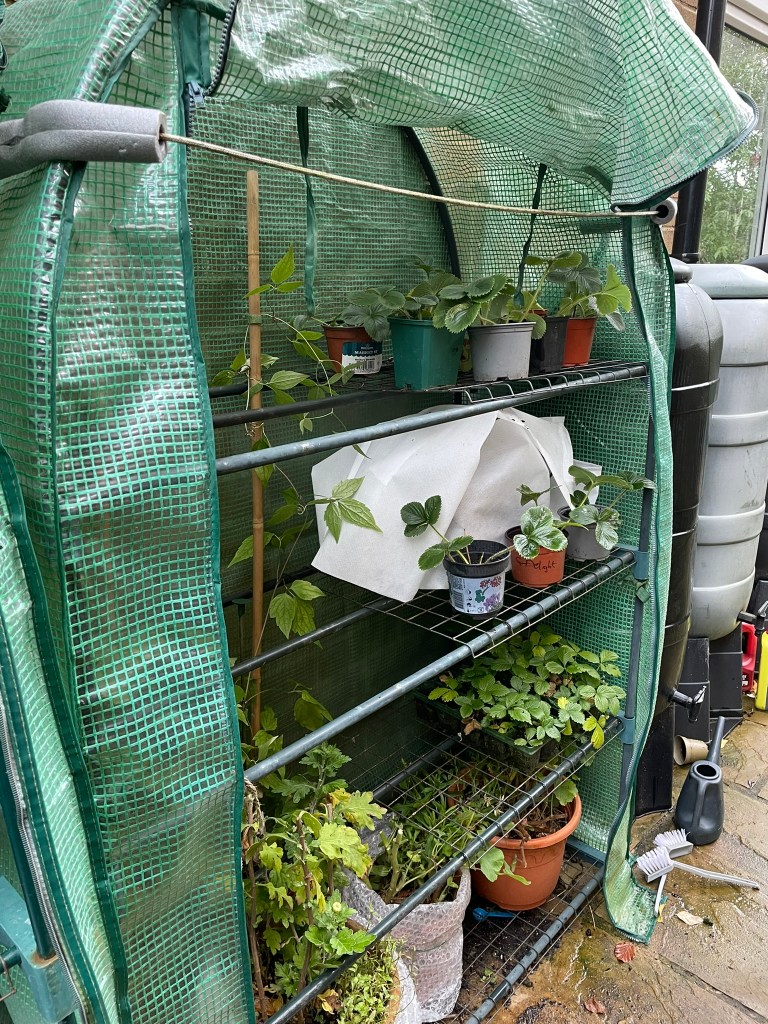
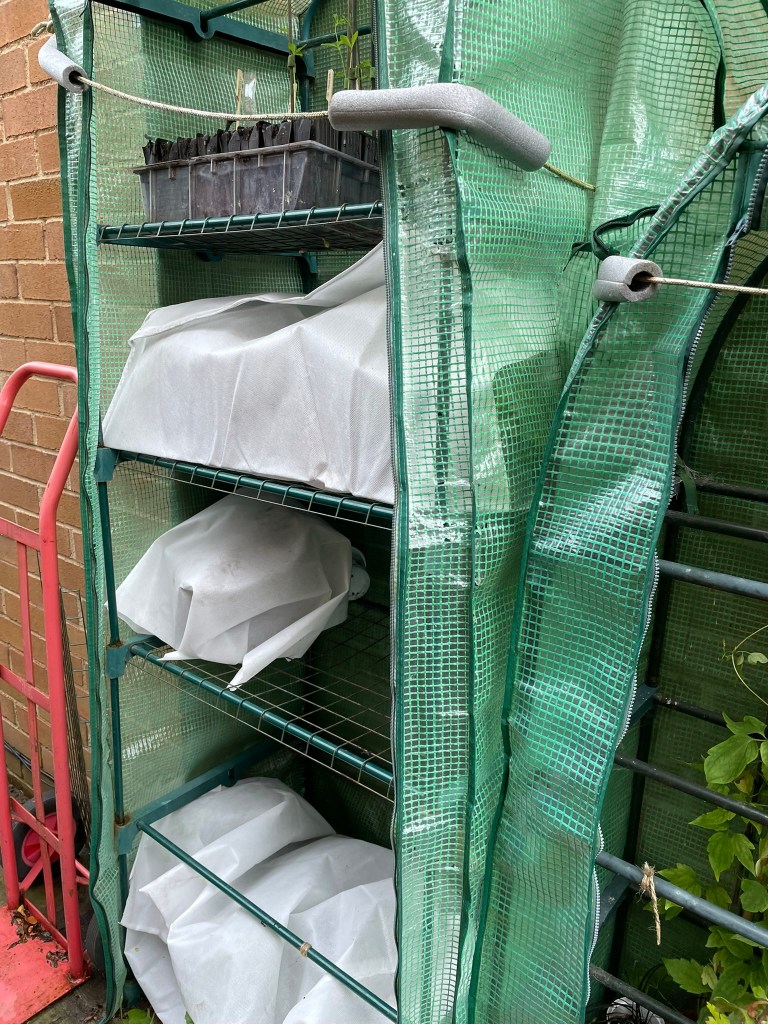
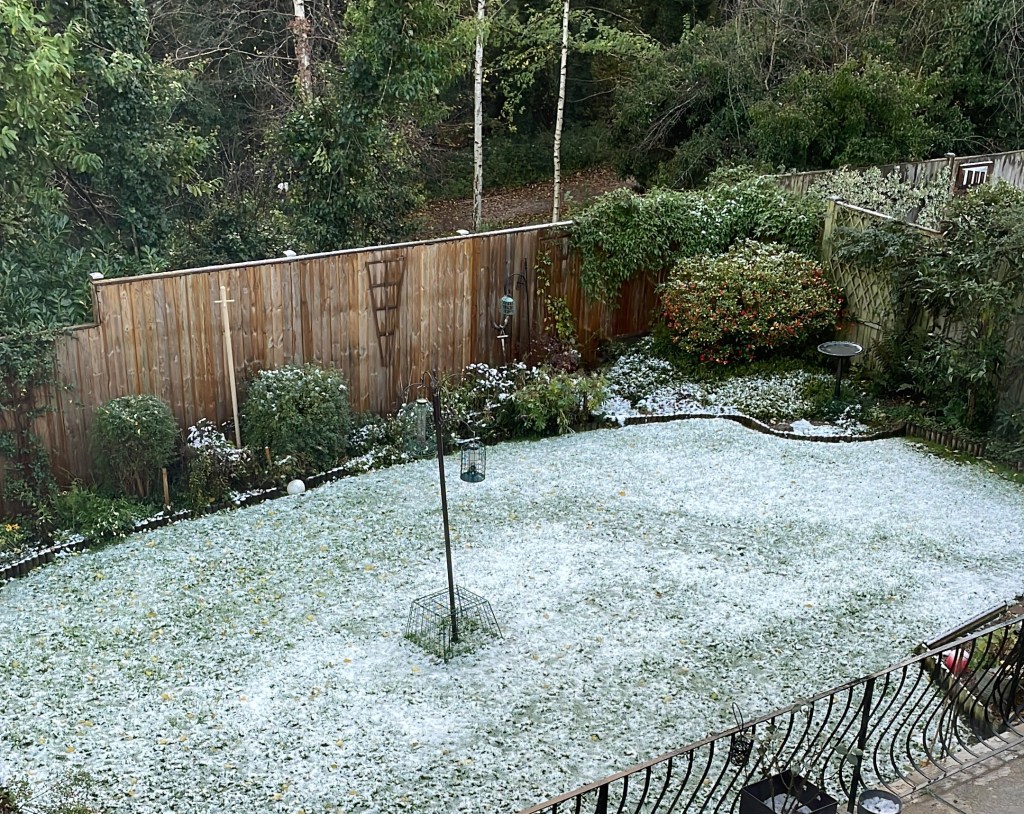
Before the recent cold snap came (we did even have a sprinkling of snow), I lifted all my potted geraniums and a beautiful black rose aeonium and transferred them into smaller pots. They’re now all tucked up in fleece in my unheated greenhouses – hopefully some will survive. I did have some success with overwintering geraniums last year, but having gone to all this trouble, I watched Frances Tophill on the first of the Gardeners’ World Winter Specials, and I’ve done it all wrong – hey ho. I’ve bubble wrapped the pot that is home to my stunning alstroemeria spitfire. An RHS adviser tells me she would be better off planted in the ground (the plant, not the adviser), but I don’t want her in the ground, I want her in a pot, so she’s going to have to try her hardest for me. It does say on the label ‘may need some protection during hard frosts‘ so I may be lucky. My strawberry runners are also taking shelter in the greenhouses – I had a bit of trouble with some of them going mouldy last year, so I need to keep a better eye on them over this winter. I’ve sown some sweet peas too, some from seeds I’ve collected and some from a packet – they’re already sprouting but don’t look anywhere near as substantial as the ones Monty Don proudly showed us a couple of weeks ago – hopefully they’ll pick up (if you have a magnifying glass to hand you might just be able to make them out in the right hand photo below – they’re on the top shelf).
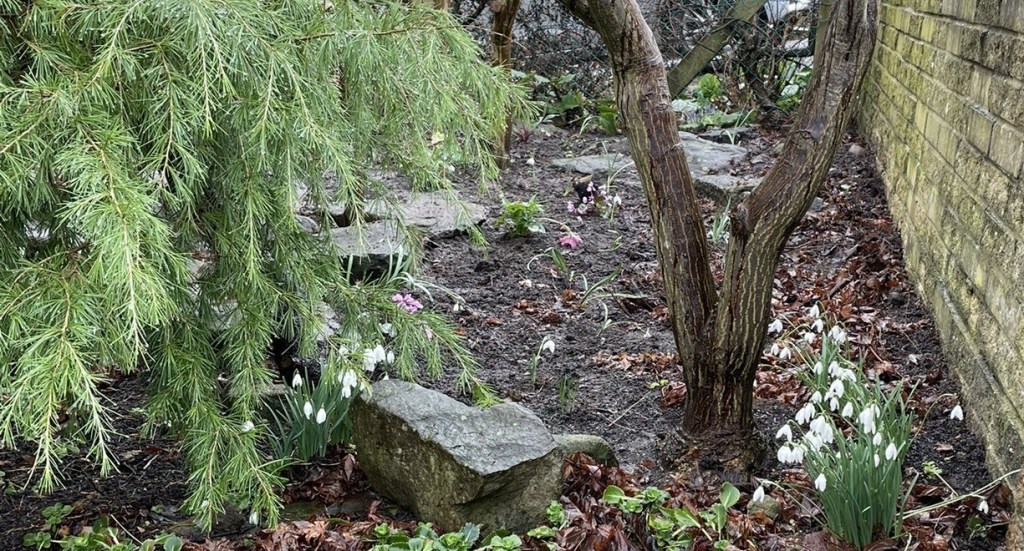
I’ve gradually been working my way through the rest of my garden to do list and I feel a bit better now. I’ve mown the lawn – hopefully the last cut of the year – that was no better an experience than the last time. I’ve pulled all the wilted annuals and vegetables out of pots and swept up leaves on the paths and patio. I don’t clear any leaves from my borders because Monty advises they will benefit wildlife, enrich the soil and provide winter shelter for creatures. It also saves a shed load of work! Next job is to do something about the algae on our paving stones which are fast becoming a slip hazard.
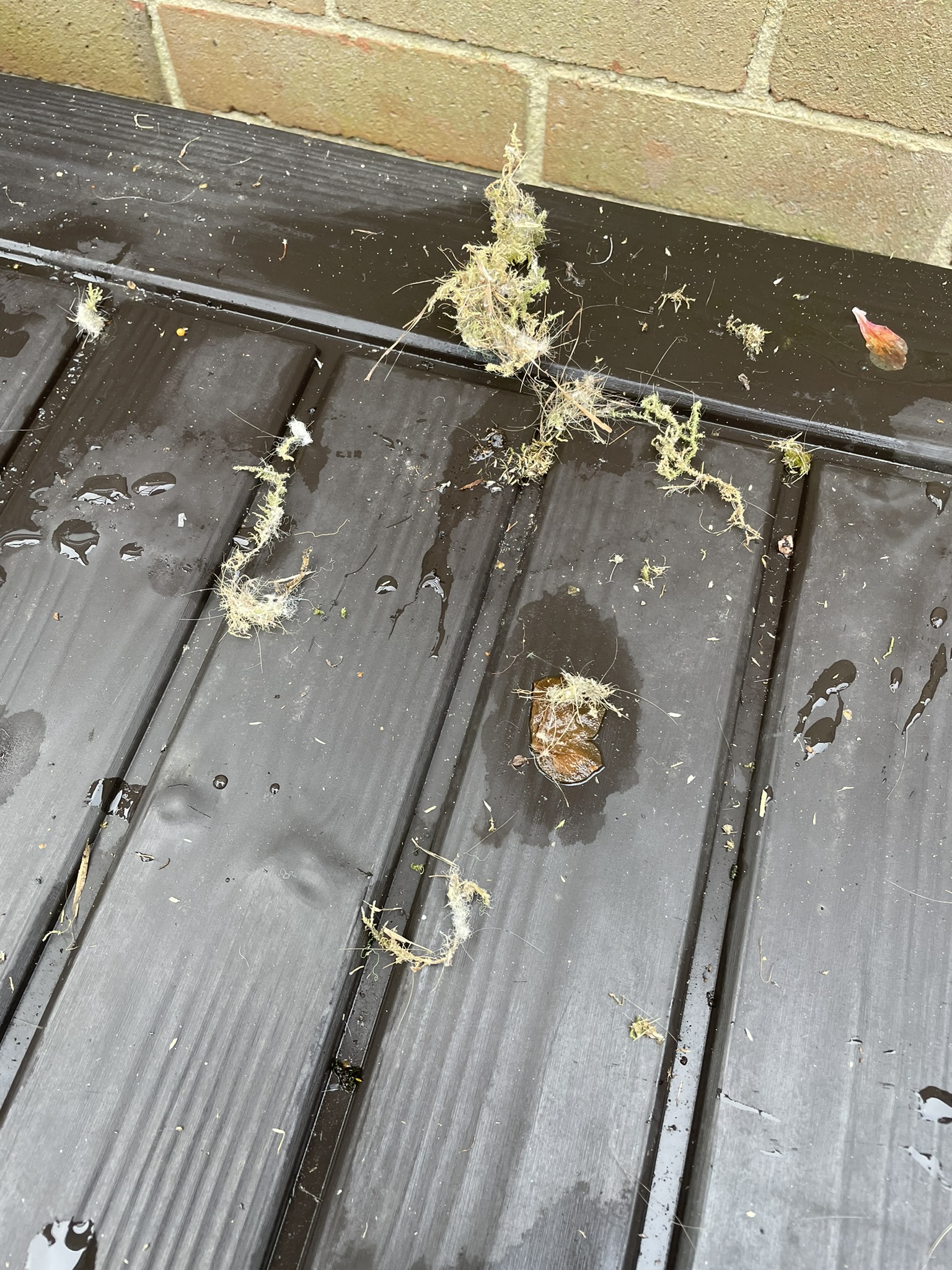
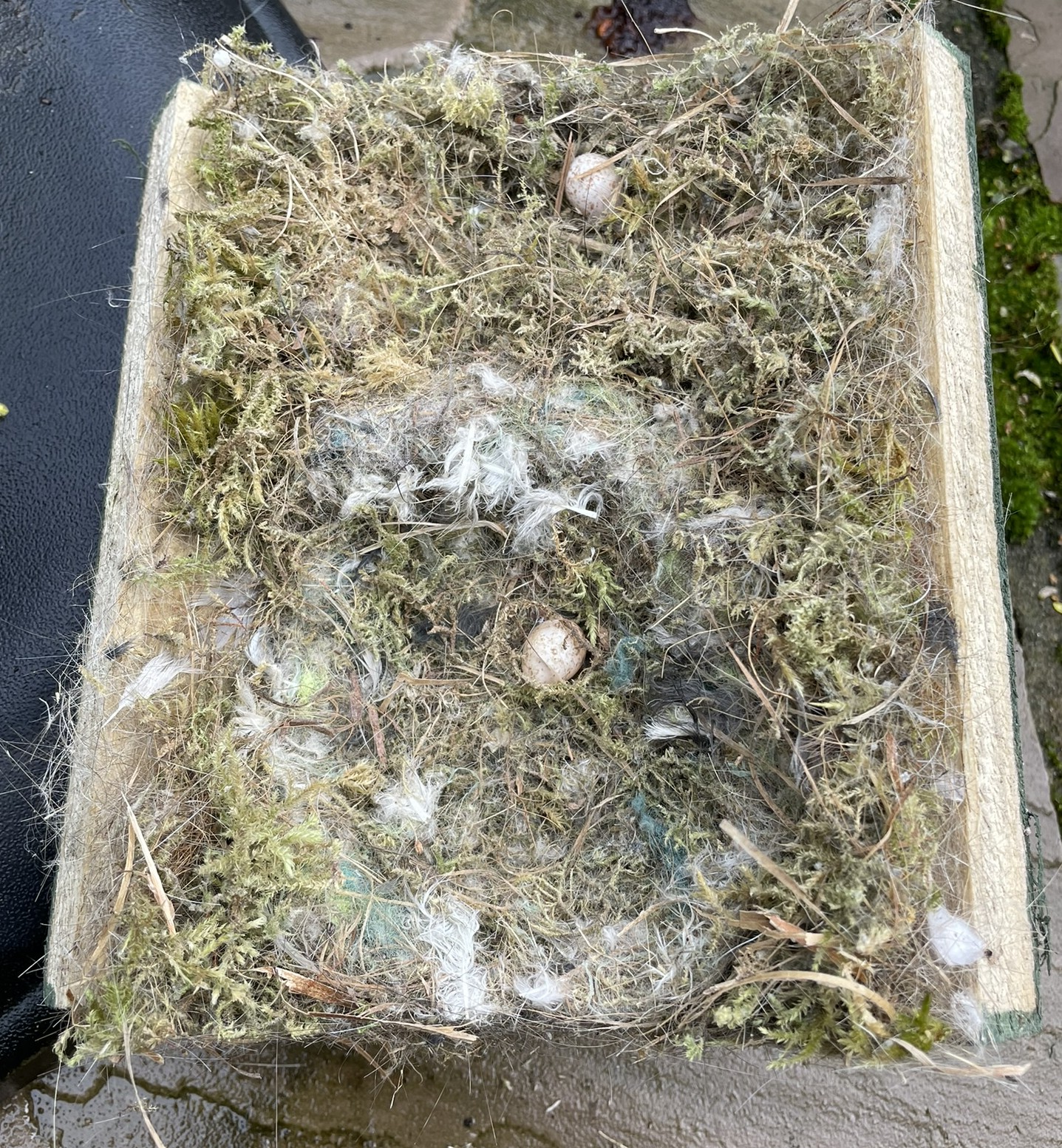
During one tidying up session I noticed a bit of a mess on the top of our cushion storage box – lots of strands of moss with a few tiny feathers thrown in. This was directly under my tit box and alerted me to the fact that it still hadn’t been cleared out ready for the next occupants. They had obviously become exasperated and tried to do it themselves! No sooner had I discovered this than GR was despatched up a ladder to bring the box down. Every time I see a nest I marvel at its construction and the hours of painstaking work that went into it. I hope they will take another look at this now desirable residence and give the sluttish landlady a second chance.
In the spring and summer I put quite a number of houseplants outside to enjoy a change of scene. One of these was a pathetic looking spider plant I’d almost forgotten about. Luckily I noticed her round by my greenhouses, tucked away under a honeysuckle plant, and look what I found when I picked her up – she’s had children and grandchildren – it just goes to prove a holiday in the sunshine can work miracles. She does look a bit frazzled round the edges, but wouldn’t you if you’d done all that on your own in the space of one summer!
I don’t know about you, but mowing the lawn over the last few weeks has made me feel decidedly ratty. Throughout our long, hot summer, the lawn barely grew, but we’ve had much needed rain since then. Even with my mower raised to its highest setting, it wasn’t long before the motor was struggling, making alarming whirring noises. A quick inspection revealed that the blades were trying their hardest to make their way through thick clods of grass, wedged in the underside of the mower. From then on, it was just a case of stopping every few minutes to scrape the wet grass out, before setting off again. This tedious process took me even longer than it should, because I’m paranoid about losing my fingers (not an unreasonable fear). There are several inbuilt safety features that make this impossible, but I still have to check and double-check before going anywhere near the blades, just in case an invisible being has come along, re-engaged the safety catch and activated the 2 buttons on the handles simultaneously, without me noticing. Usually one fully charged battery is more than enough for one lawn cutting, but recently I’ve needed to move on to the ‘spare’ – I’ve named it Harry. The other issue with sodden grass is it weighs a lot more than the dry variety, and takes up more space in my pop up garden trugs. No matter though – GR has his uses – he can lift heavy things and I think I’ve mentioned before, he’s a dab hand with a sledge hammer when it comes to compacting garden waste into the wheelie bin.
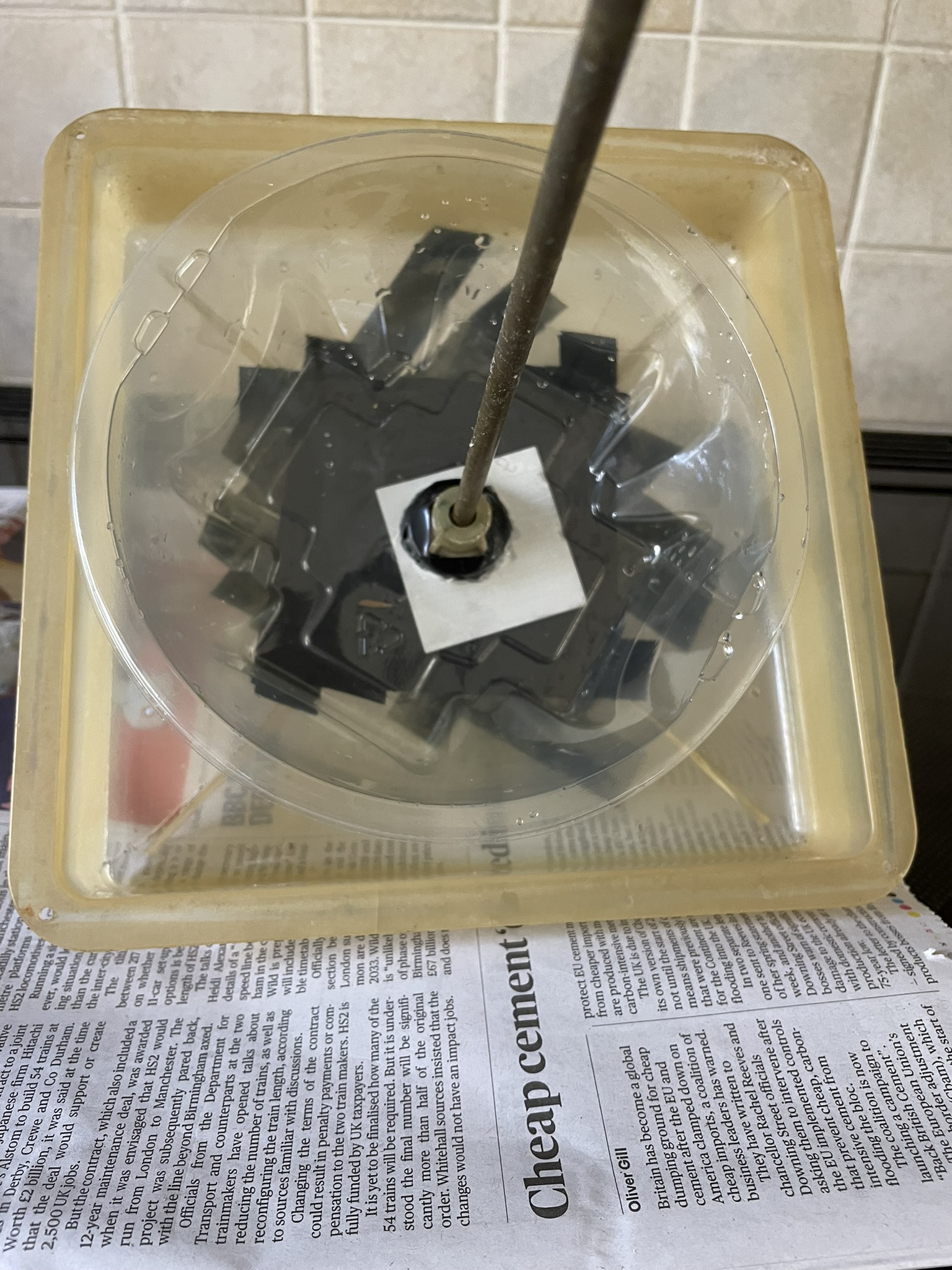
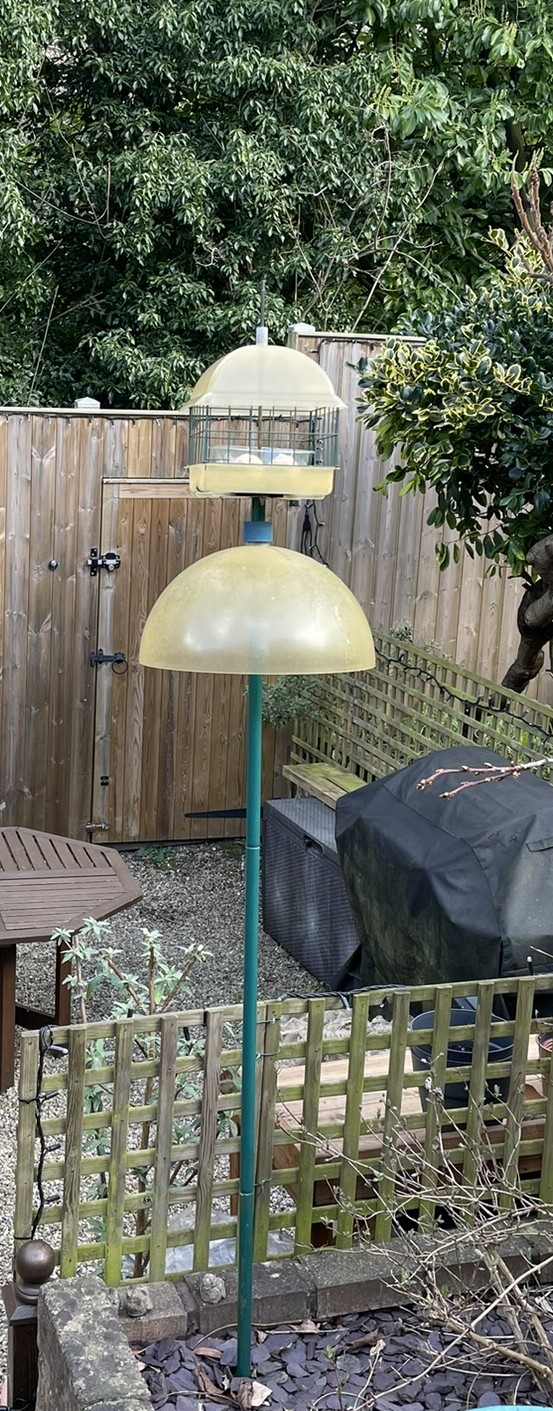
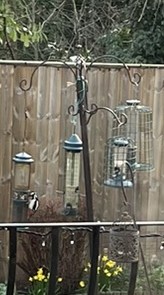
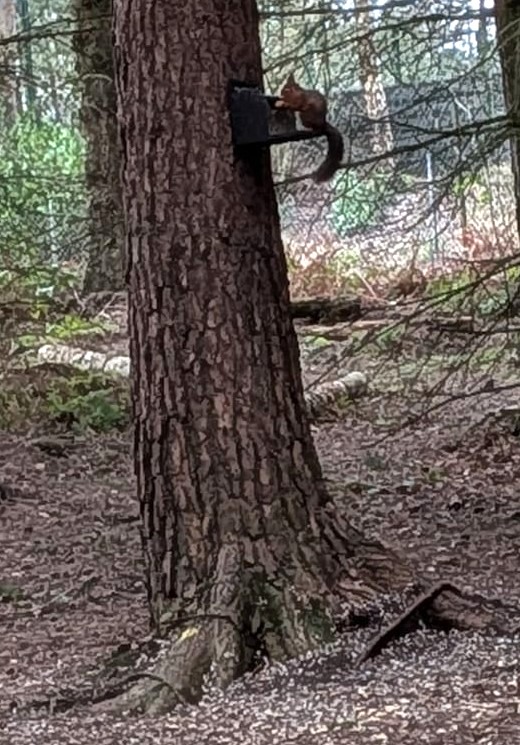
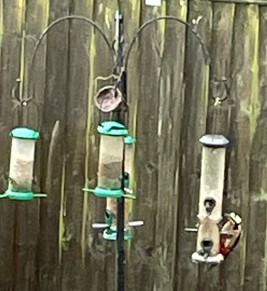
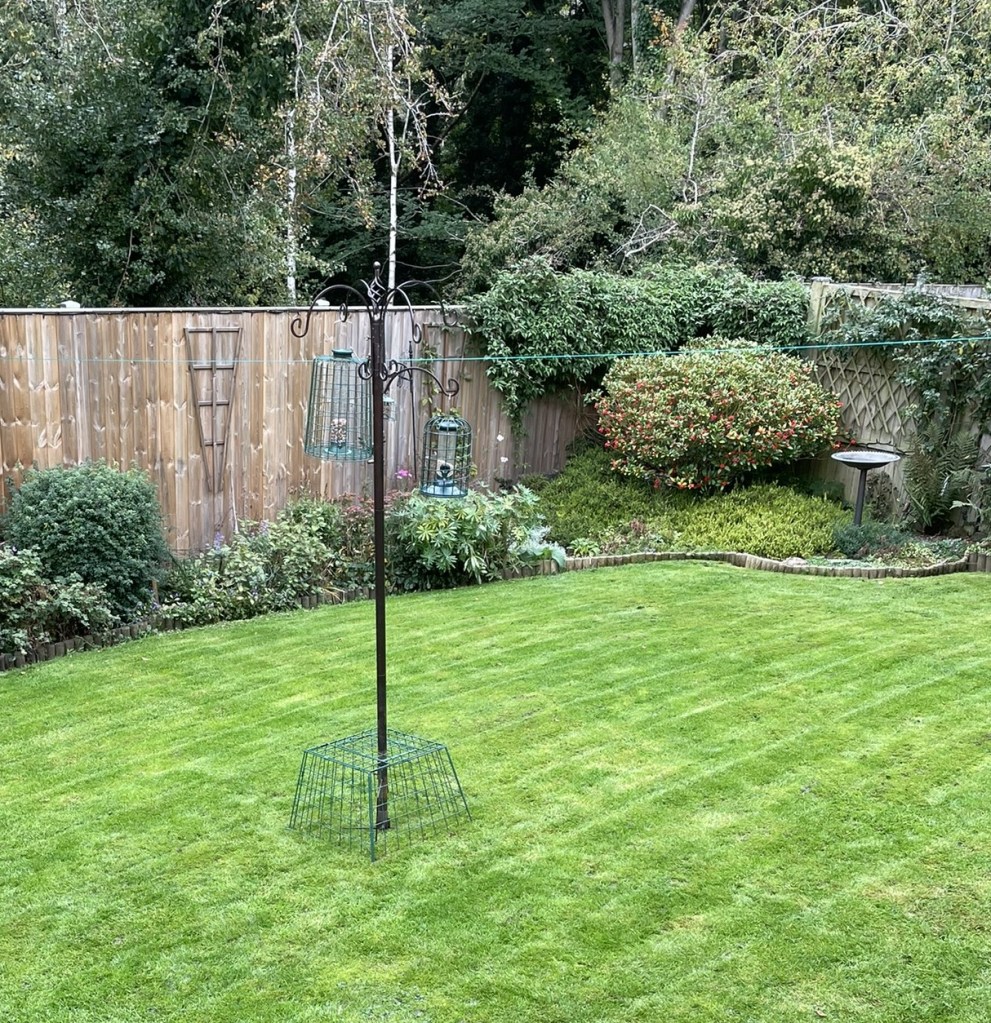
Anyway, feeling ratty after the last mow, I popped into the kitchen to make myself a well deserved cup of tea. Waiting for the kettle to boil I looked out at the garden and tried to convince myself it had all been worth it. I spied what I thought was a squirrel in one of my exorbitantly expensive squirrel proof bird feeders. Now my eye sight leaves a lot to be desired, but as I squinted, it dawned on me there was a distinct absence of a fluffy tail. Horror of horrors, it was a rat! I raced out with Lily – she seemed oblivious – had it been a squirrel she would have seen it off in no uncertain terms. The rat remained in situ, happily munching away. Even when I approached it, brandishing a 7 foot long washing line prop, it took its time, before casually dismounting the bird feeder and disappearing down a rat hole in my border. I found 2 rat holes, so I filled them in and kept watch over the next couple of days. Ratty returned, sometimes climbing up the bird feeder pole, sometimes jumping from the fence onto the feeders. I tried greasing the pole, but Ratty must have non slip paws. I’ve moved the feeder away from the fence, into the middle of the lawn, so unless Ratty is an Olympic standard long-jumper, or a champion tight rope walker, he won’t be able to jump from anywhere onto the top. I’ve also bought a baffle, which once installed, will prevent access from below. It does mean a bit of inconvenience when it comes to future grass cutting though, because I’ll have to lift the cage that protects ground feeding birds, in order to strim round the pole. I hope the birds appreciate the trouble and expense I’ve been to on their behalf!
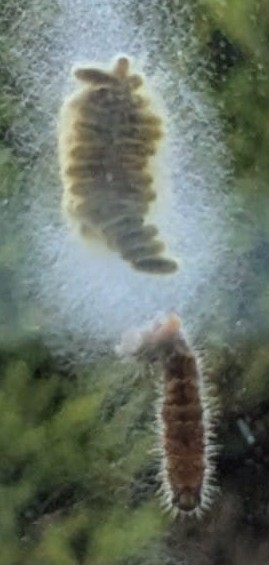
First an update – following on from last month’s tale of caterpillar carnage, I thought you might be interested to see this photo my sister sent me of parasitoid wasp cocoons on her window! Gruesome eh?
Anyway, moving on – I was admiring Victoria’s lavender bed a few weeks ago and we were marvelling at the number and variety of bees visiting the flowers. She questioned where all the bees disappear to in winter – I said I’d look it up. It seems that different varieties of bees have different survival techniques. Bumblebees look like they might be OK, in their Elizabeth Taylor style fur coats, but that’s not the case. They can’t survive being out in cold temperatures and their favourite foods aren’t available in winter. I don’t suppose Liz would have needed to be out in the cold for long, not even in a fur coat, and she certainly wouldn’t have gone short of food (or drink ) in the cooler months.
Apparently there are over 250 species of bees in the UK – can you believe, there are 24 different types of bumblebee and one domestic honeybee. The rest are solitary bees. Bumblebees hibernate in winter after pigging out on nectar. They hide away underground, or even in flowerpots. To be honest I had never heard of Bramblebees before Googling, but apparently they tuck themselves into bramble stems to keep cosy over winter.
After enjoying buzzing about in the spring, many of the solitary bees finish the season with a bang, if you’ll pardon the expression. They mate and lay eggs in their nests. The grubs hatch and feed on pollen left by their mums. They mature by the end of autumn, but hibernate until spring when they emerge to feed from early flowers. Climate change sometimes messes with these timings, which is why we do see bees at unexpected times of the year now.
I’ve written about the value of woodlice in our gardens before, but I read an article this week which advised that they are edible and taste like prawns when cooked. Now I’m partial to a juicy prawn or 2, but I don’t think I could be tempted – imagine all that peeling too. Of course, the likes of Ray Mears and Bear Grylls might suggest eating them in a survival scenario, but I bet there’s a budding Michelin starred restaurant somewhere out there considering serving them up. I have discovered that M Holt wrote a book in 1885 entitled Why Not Eat Insects. He wrote it in an attempt to help people living in poverty and to introduce some diversity to the diet. As mentioned in the past, woodlice do find their way into my house quite frequently, but they definitely won’t be gracing my table if I can help it.
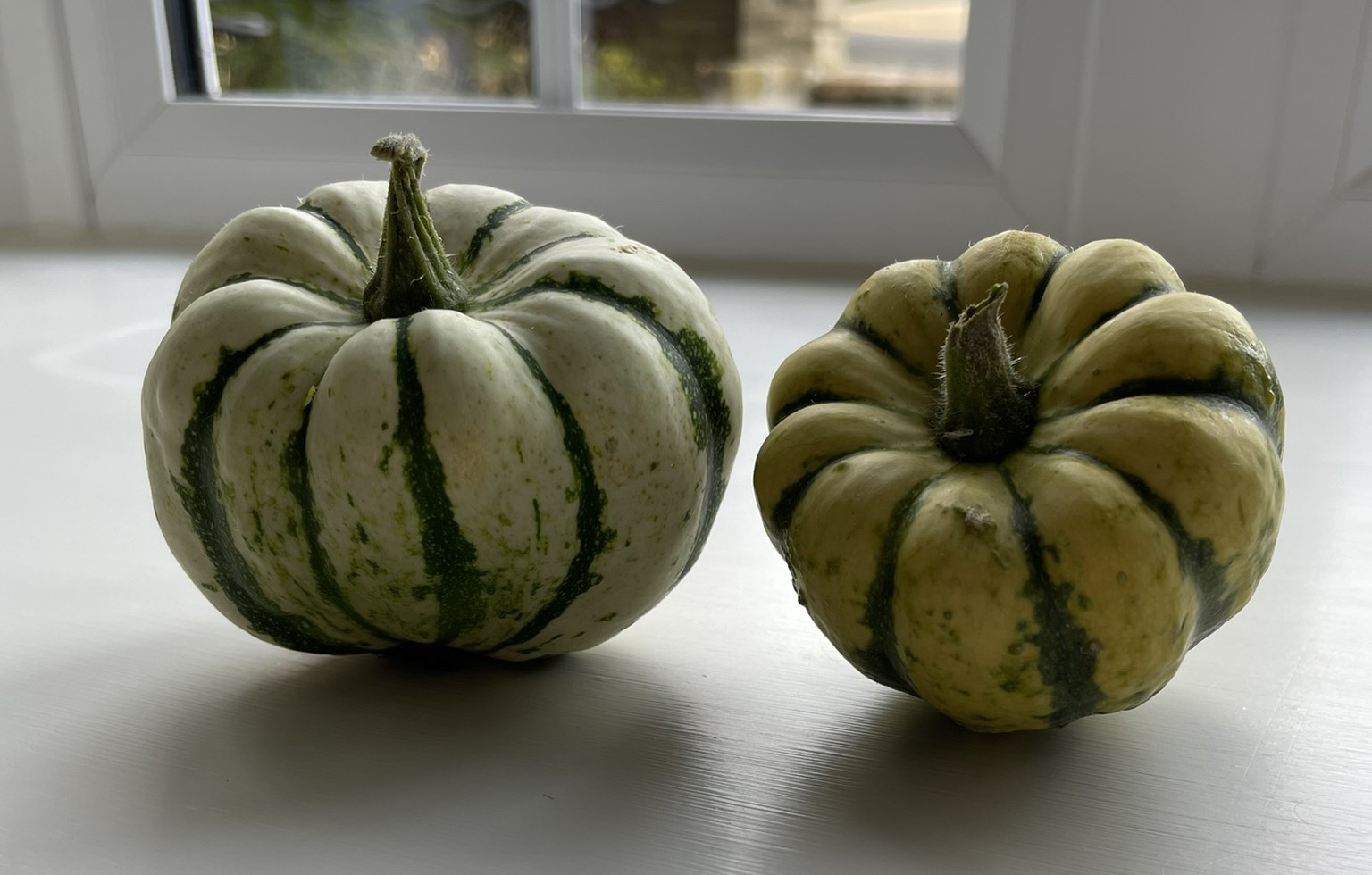
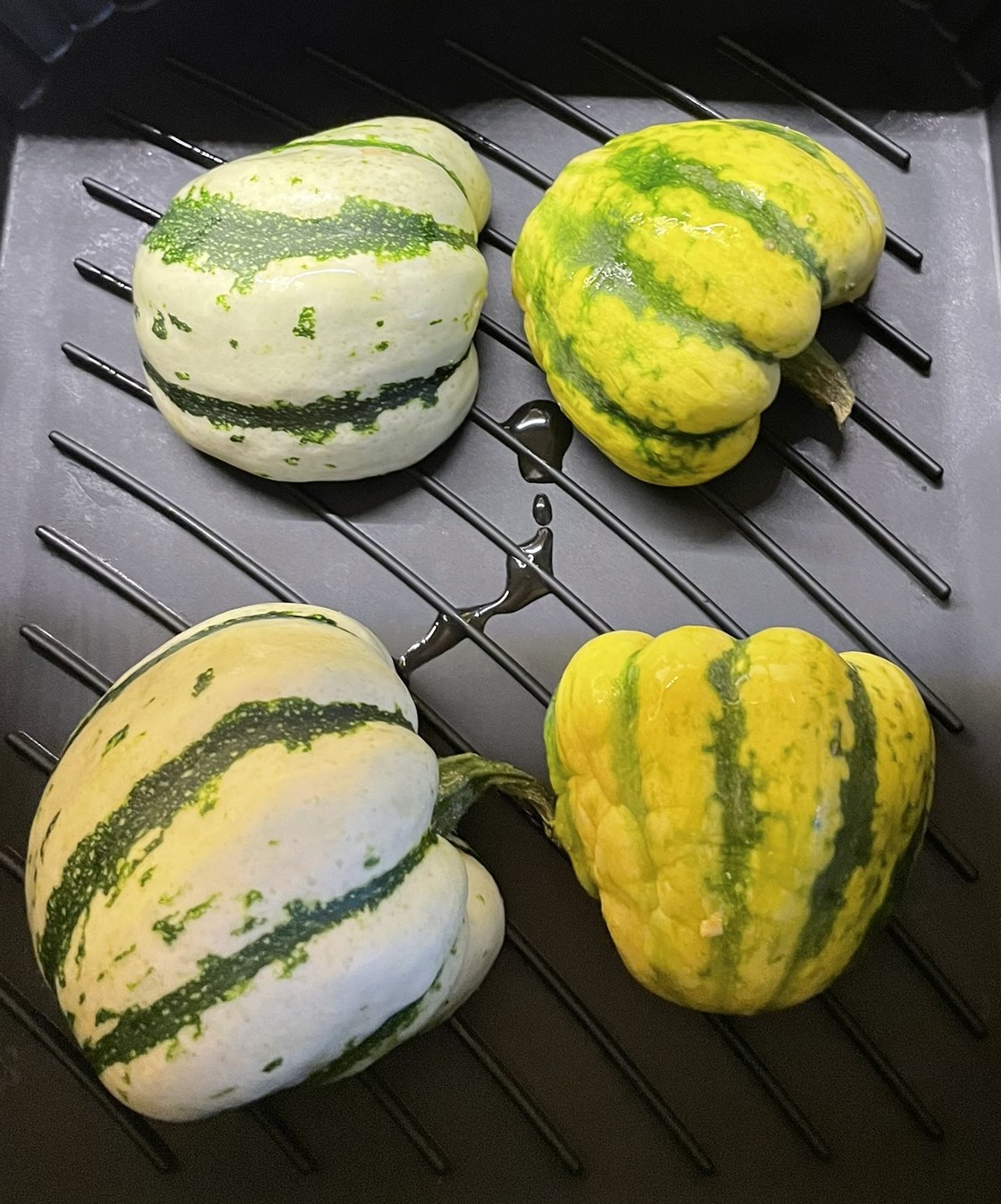
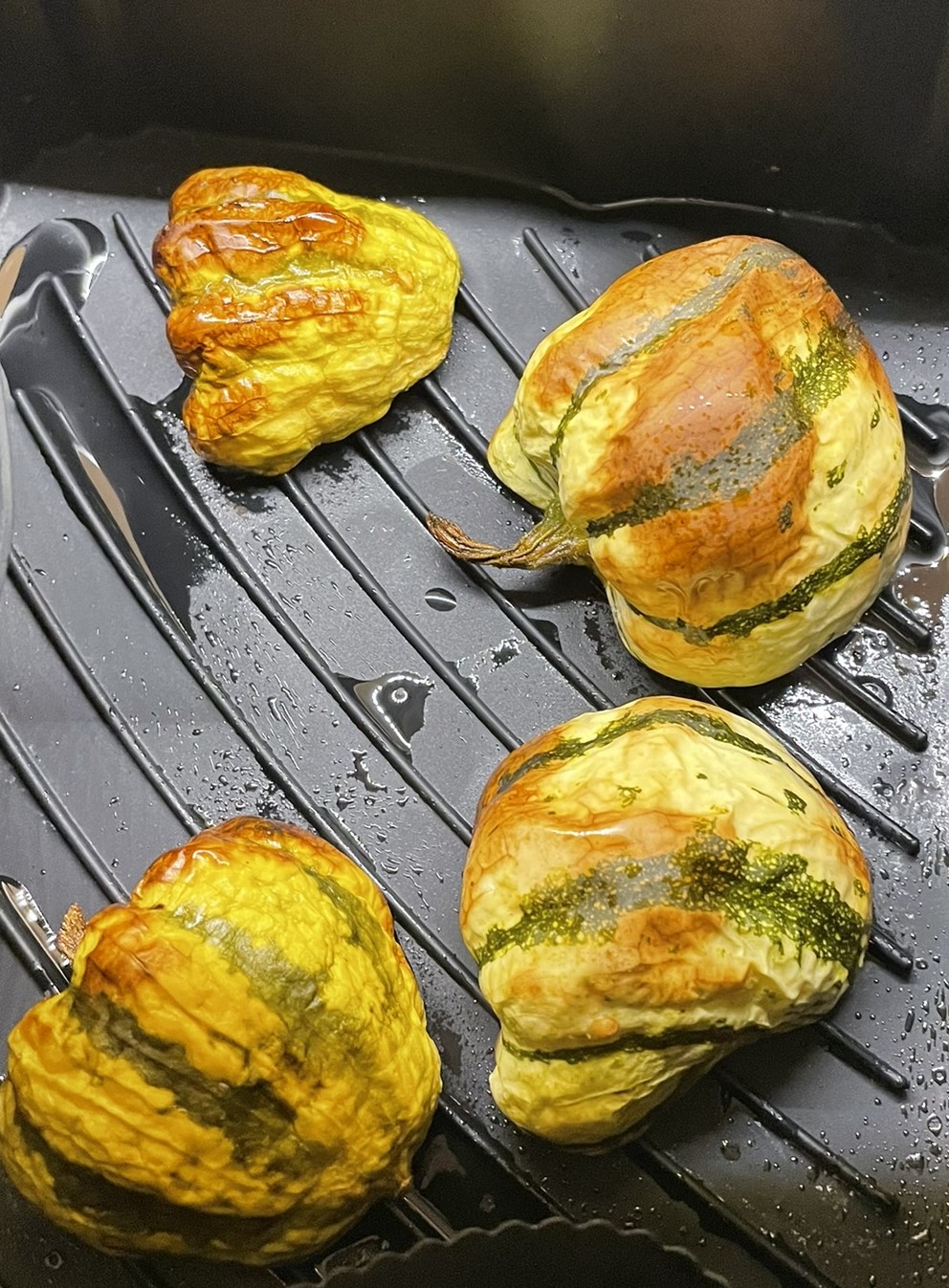
We’re now in the midst of Master Chef and Bake Off season. Have any of the contestants presented sweet dumpling squash to the judges, I wonder? I think I mentioned last time that I’d grown 3 – well one dropped off, but this week I roasted the remaining 2 in my air fryer. They were delicious, mashed with a little salt and black pepper. I’ll try to increase my crop next year – I better treat them to bigger containers next time.
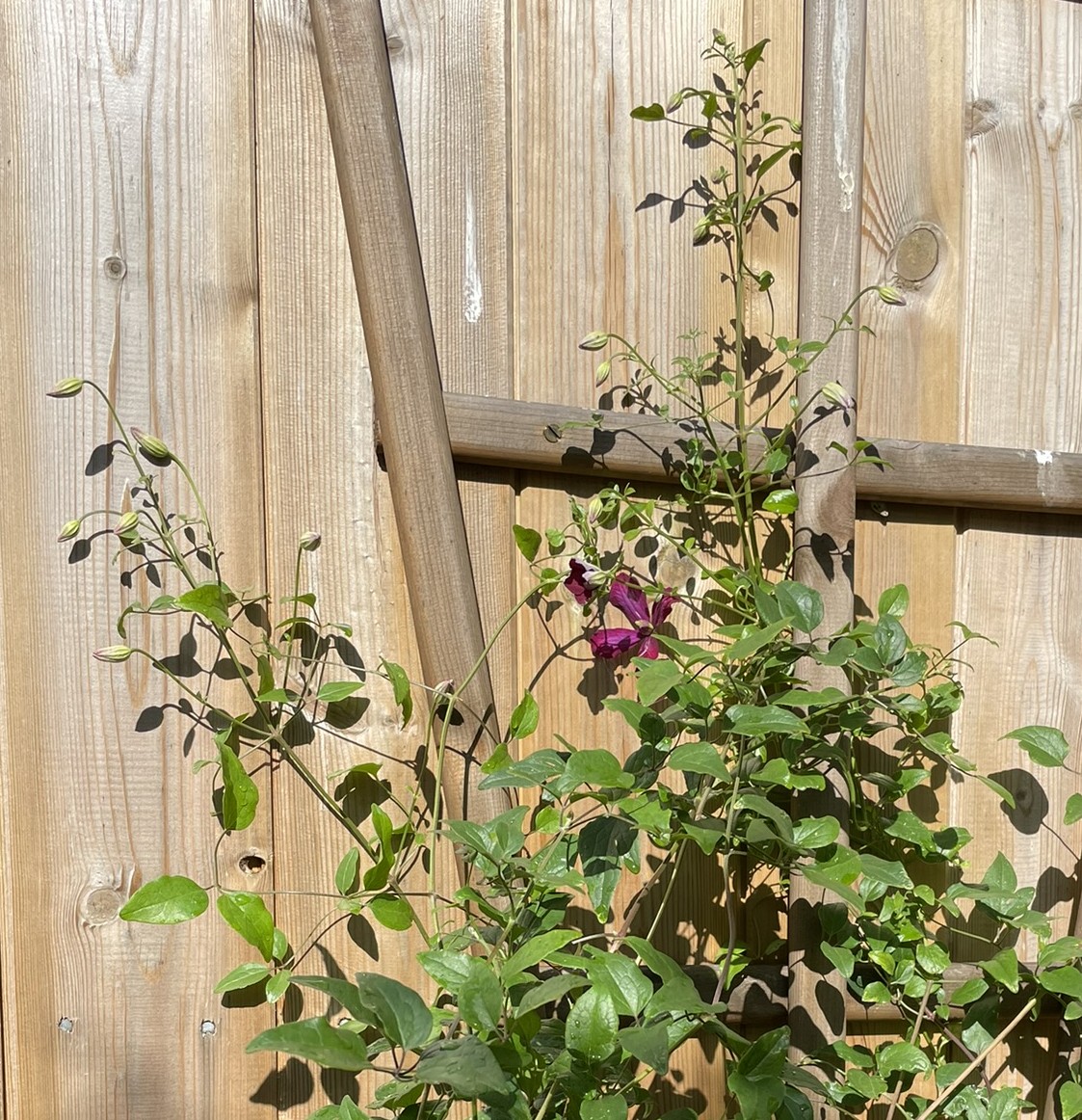
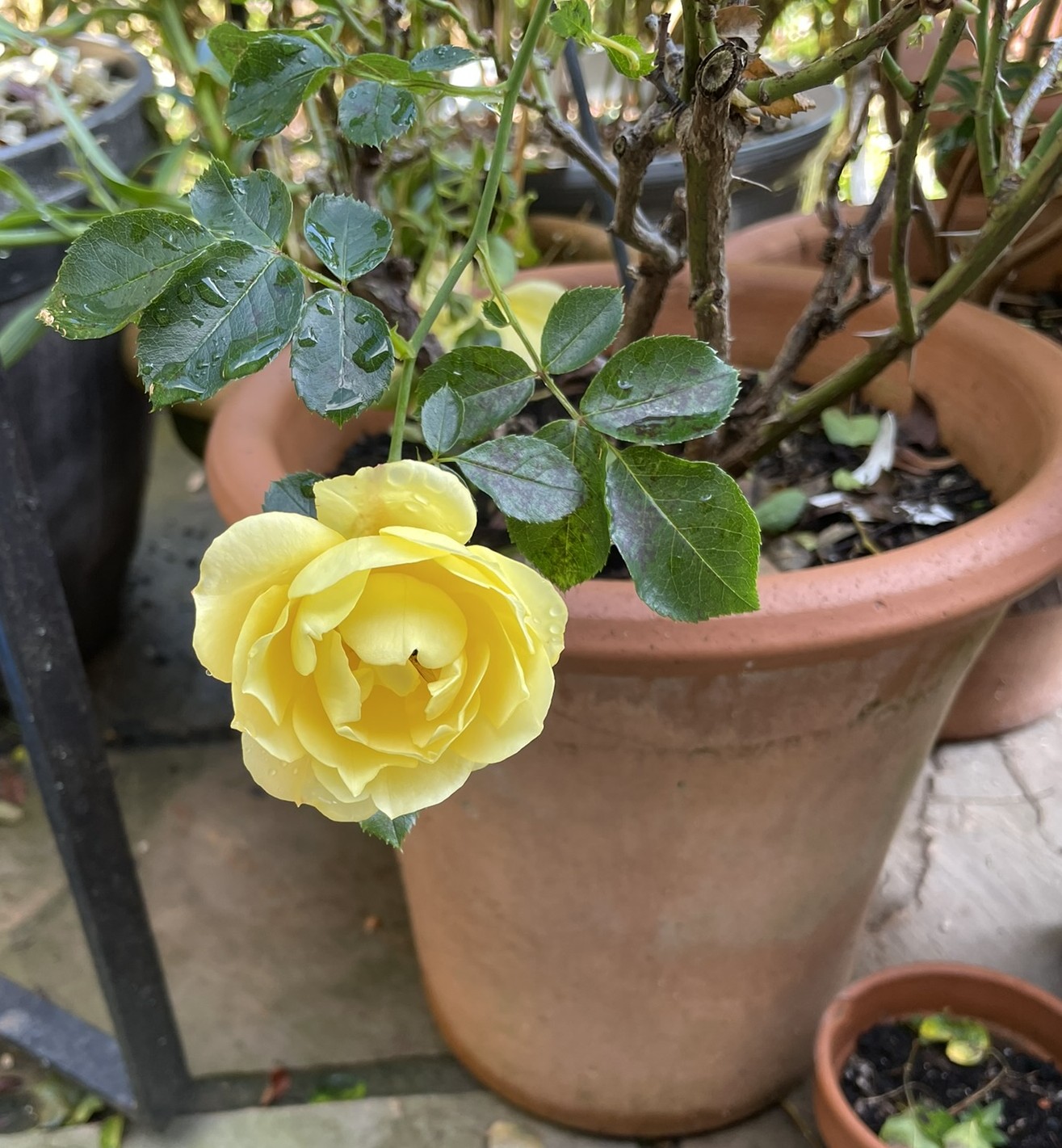
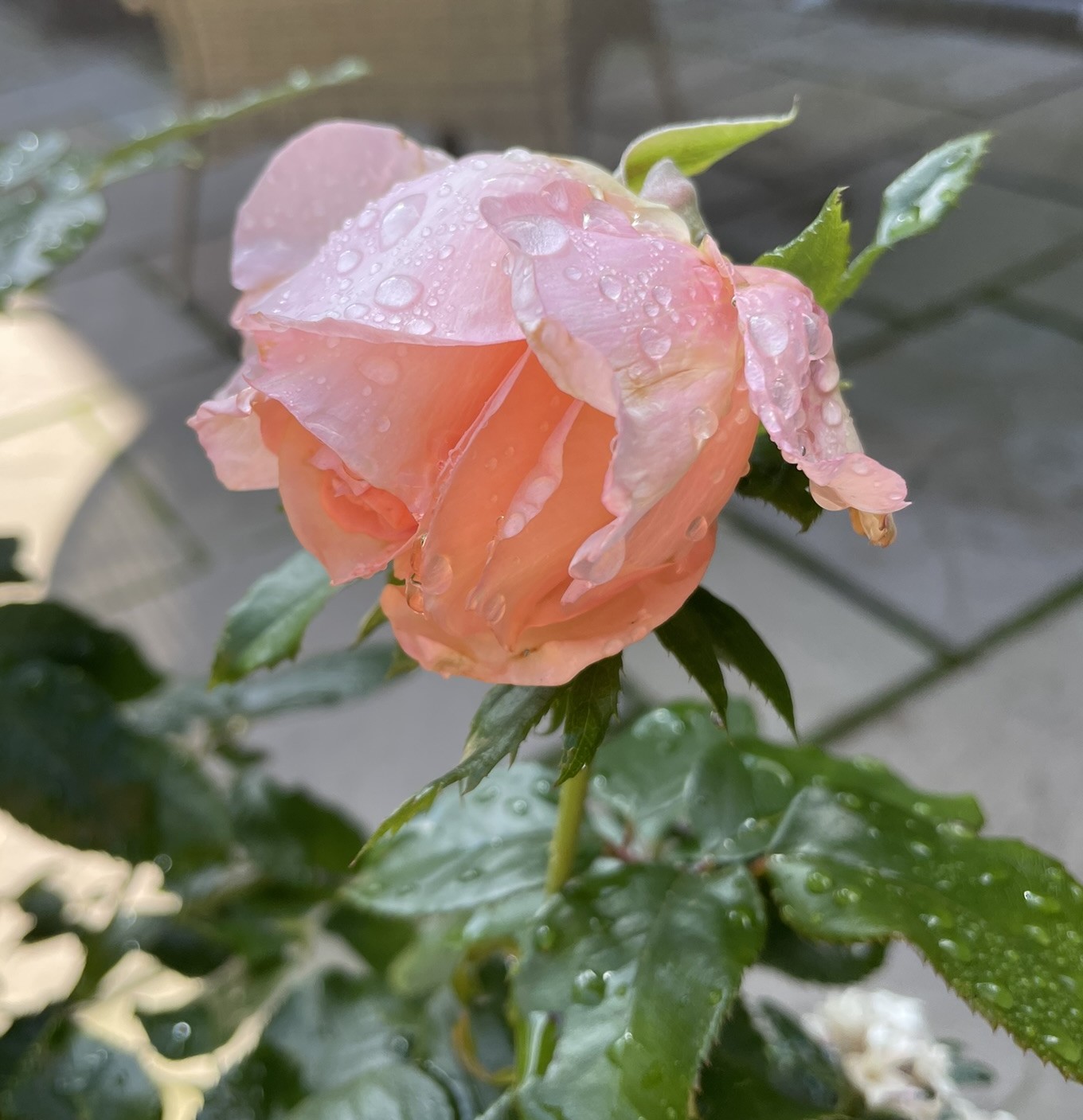
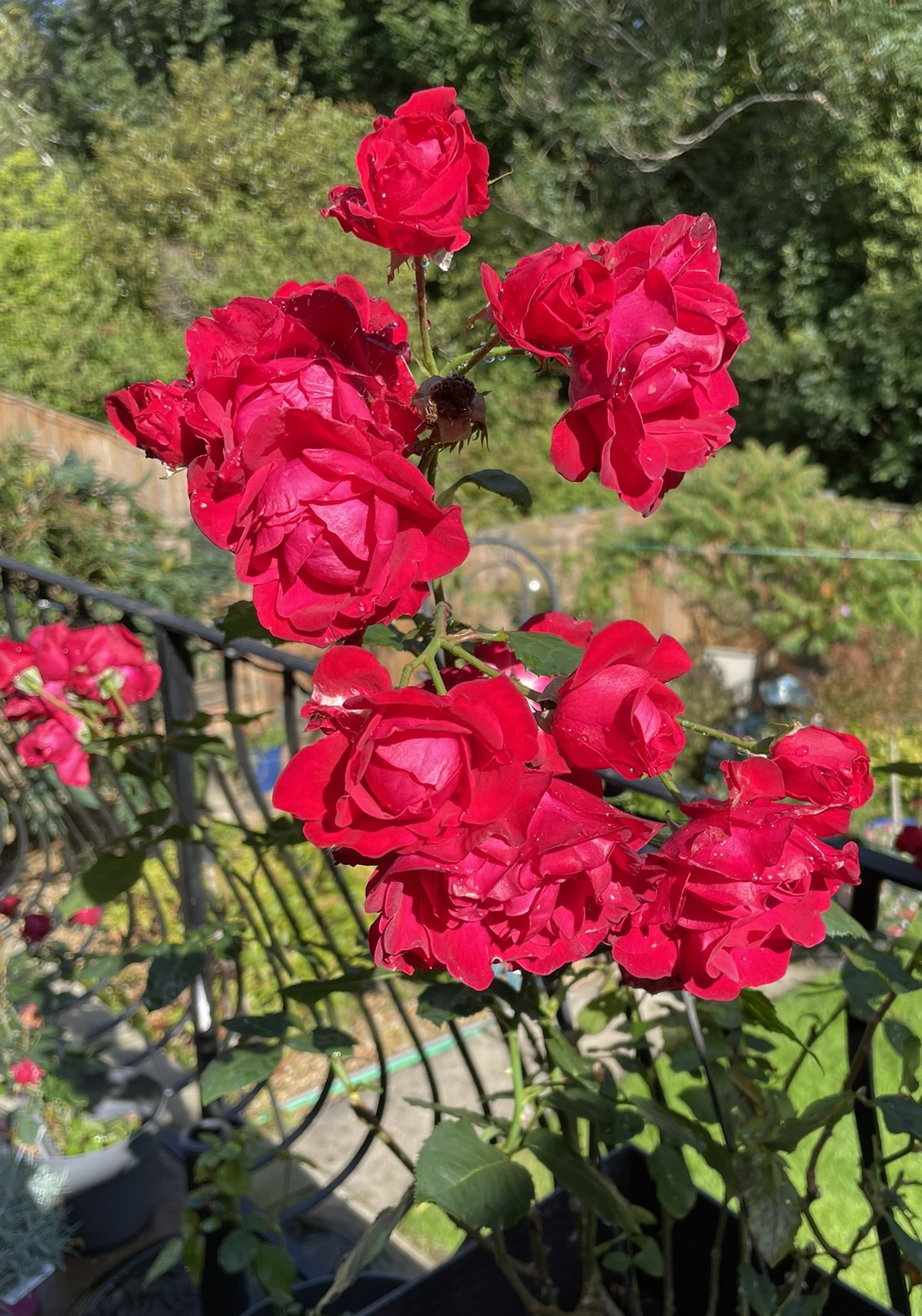
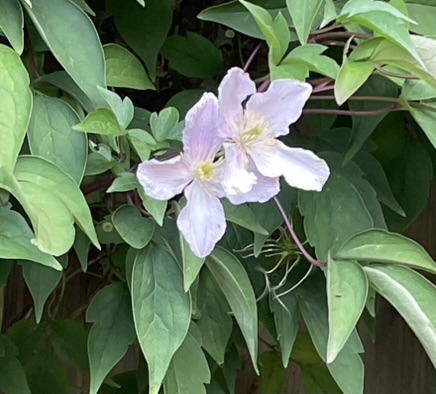
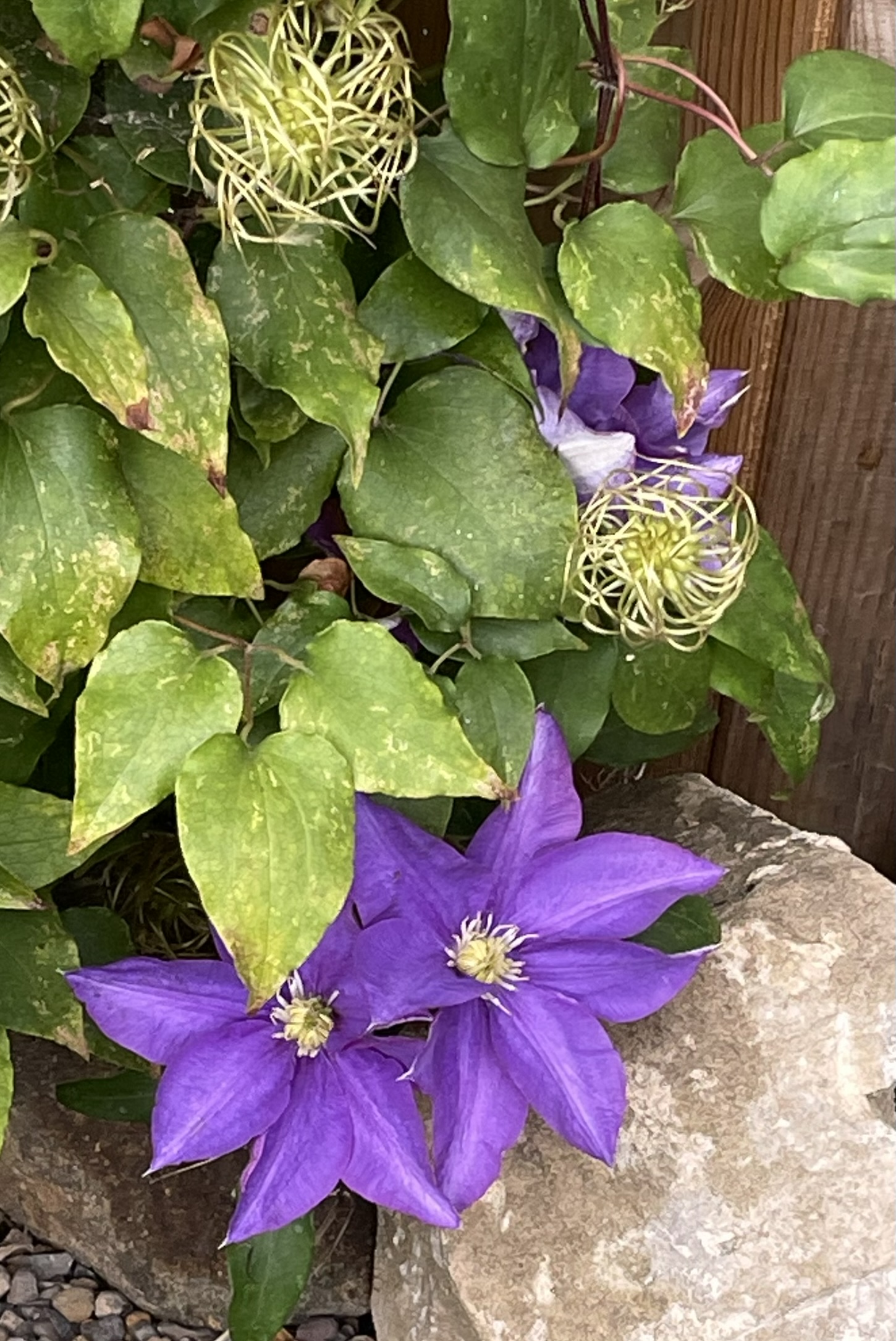
So we’ve now had quite a lot of rain, which we need, but not nearly enough. There’s still plenty of sunshine though – 2 of my clematis are loving it and it’s certainly been a good year for the roses!
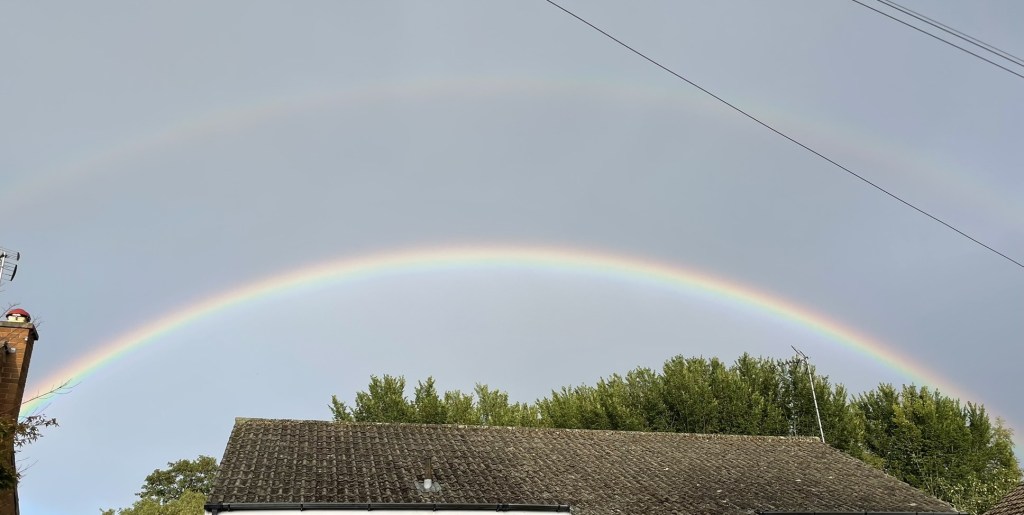
Oh, and it’s made for some brilliant rainbows – this was a double one that appeared over our street recently.
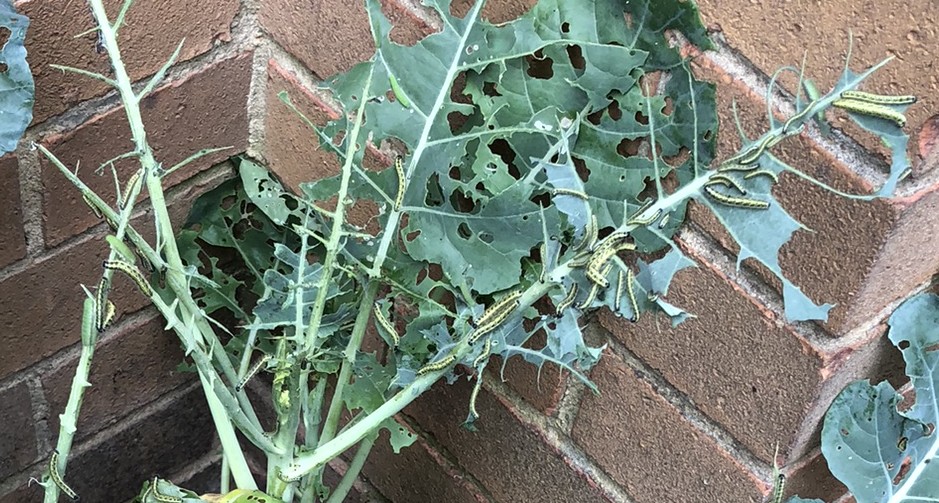
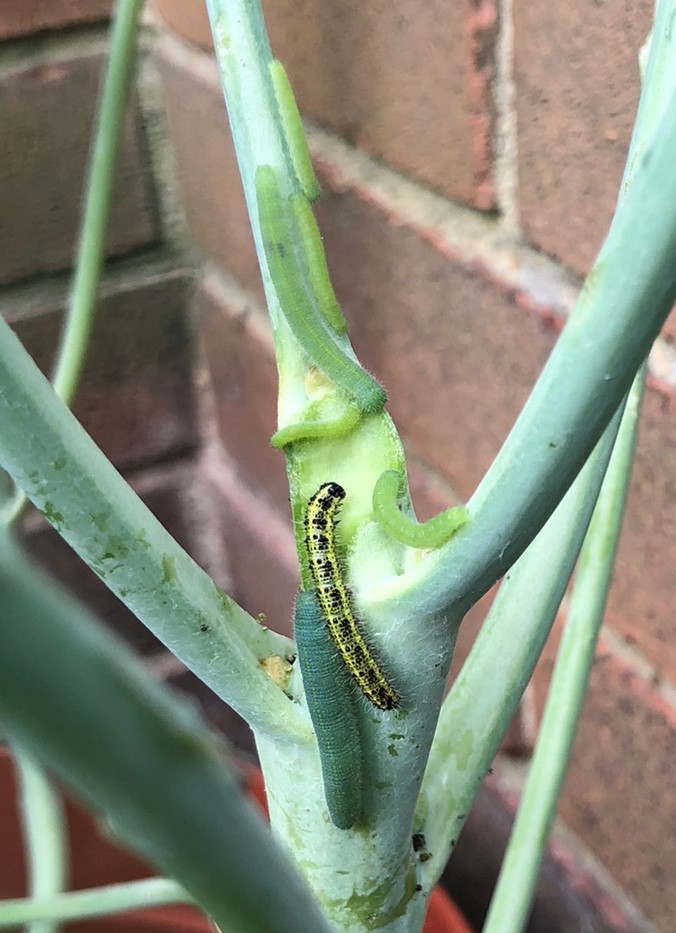
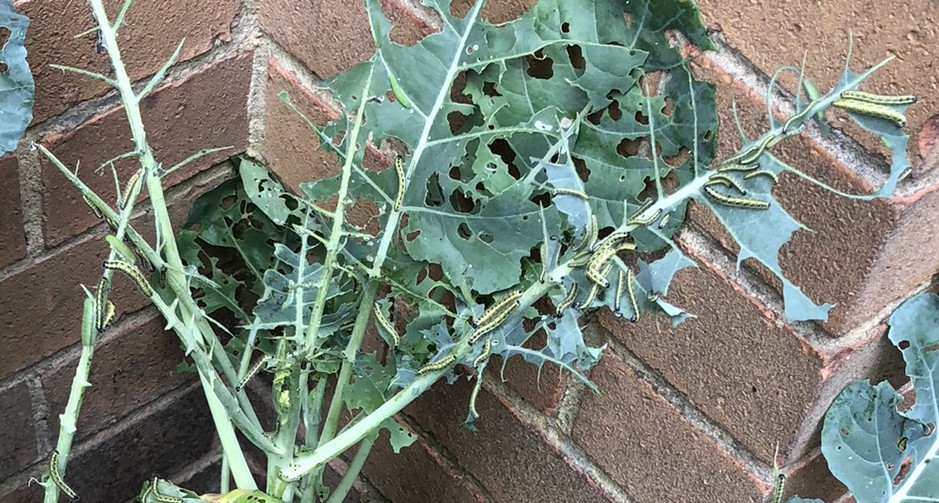
As mentioned previously, despite the mesh cages I created around my broccoli plants, the butterflies still managed to lay their eggs on the leaves. Last week I found they were covered in very fat caterpillars, munching their way through the foliage at an alarming pace! Enough was enough, so I decided to pull out what little remained of the plants. I noticed about half a dozen wasps circling one of the containers – they reminded me of sharks preparing to attack – and sure enough, they went in for the kill. I was really quite shocked to see how viciously they dispatched several caterpillars – it was a sight not for the faint hearted. I’m afraid I didn’t intervene though, not because I accept this is all part of the circle of life, but because I didn’t want to get stung (call me a wimp if you like).
I’ve never witnessed such a thing before, so of course I had to Google. Apparently the wasps we commonly see in our gardens do hunt and kill caterpillars, carrying them back to their nests to feed to their developing larvae. Also some wasps lay eggs inside caterpillars. Sorry, this bit is gross – the wasp larvae then hatch and feed on the caterpillar from the inside out, consuming its body’s nutrients. I worried half the night that I had put caterpillars in my garden bin that were in fact feeding potential swarms of wasps. I kept the lid firmly shut awaiting bin collection day. In the meantime I started to fret about the bin men, but reassured myself with the knowledge that wasp eggs take at least 5 days to hatch, and they don’t develop into full blown wasps for 4 to 7 weeks – so there was no chance they would swarm out and attack the men as they went about their work – phew!
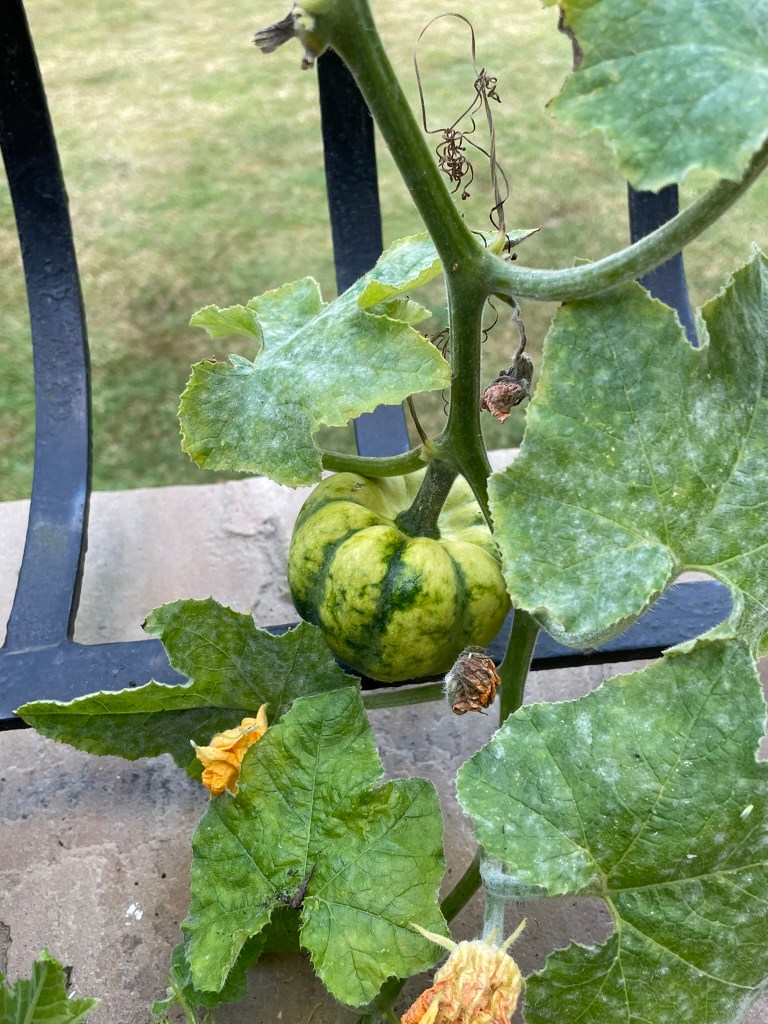
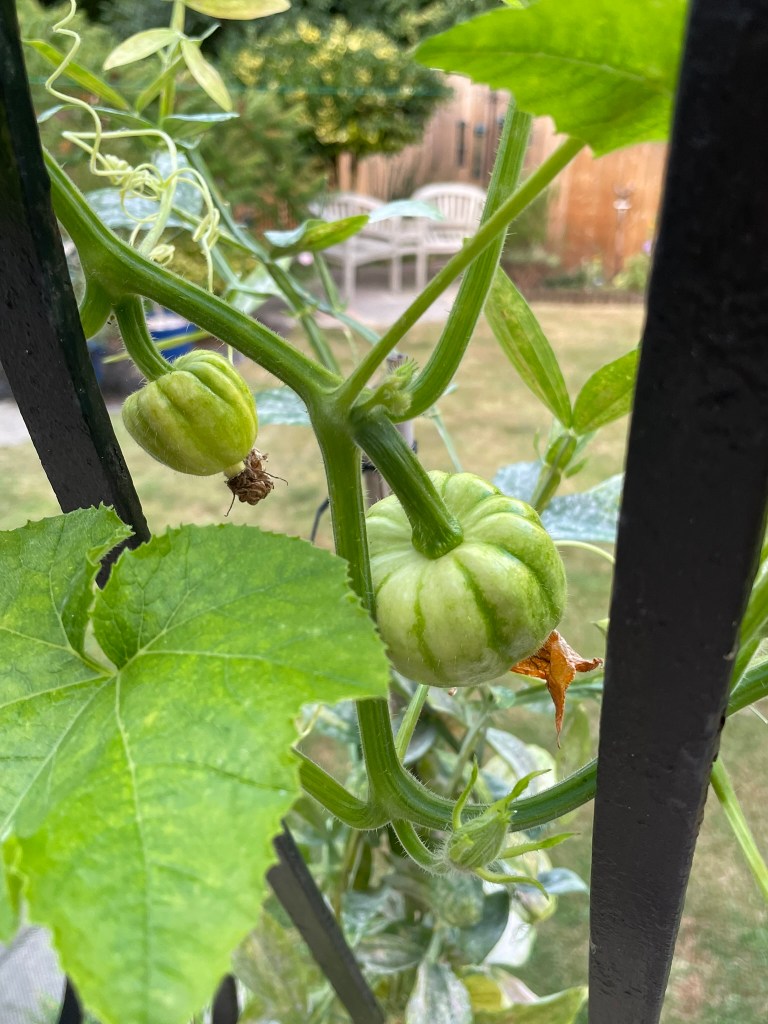
To be honest I won’t bother growing broccoli again next year. For the small amount I managed to harvest from my containers, it wasn’t worth the effort. I think I’ll concentrate on dwarf beans, courgettes and tomatoes and I might have a dabble with cucumbers. I’ve just potted up some strawberry runners and I’m keeping a close eye on my sweet dumpling squash plants, which are a first for me this year. I’ve grown them in ridiculously small containers, because I didn’t have anything bigger to hand, but excitingly I have 3 gourds – they’re supposed to grow to the size of a croquet ball and one of them is very nearly there – I’m told they’re delicious.
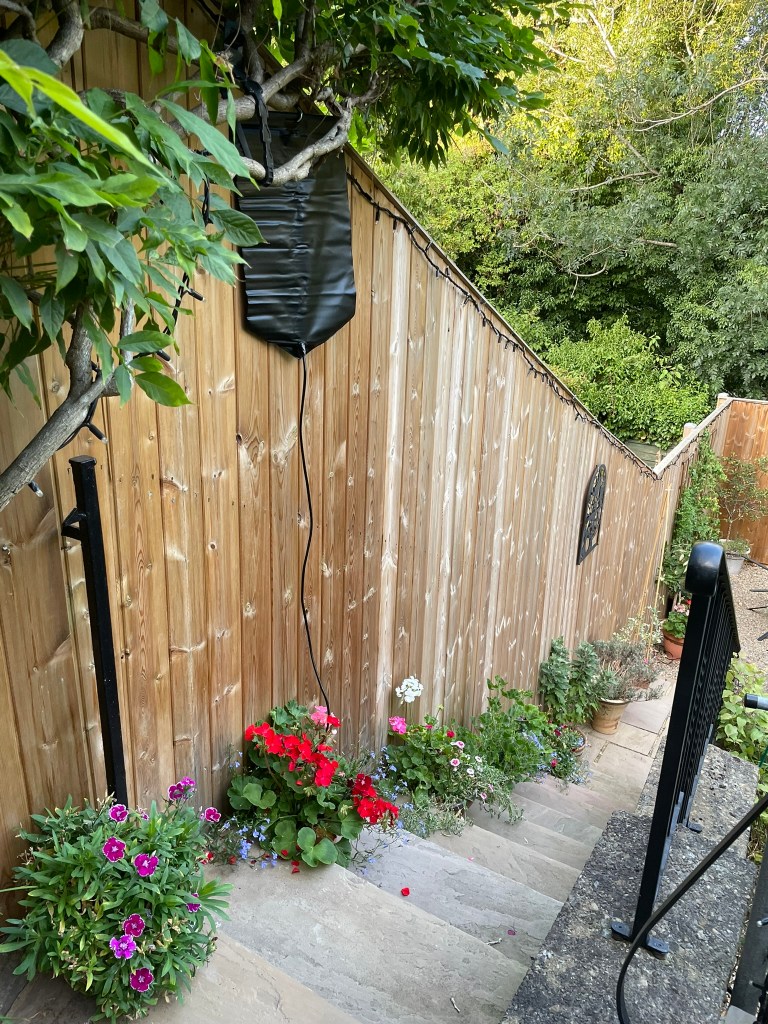
So, what else have I been up to in the garden? Well, with all the hot weather we’ve been having I was getting a bit tired of tramping up and down the garden steps with watering cans. I decided to rig up an irrigation system that relies on gravity. The kit arrived from eBay. It contained a bag that resembles something you’d see on a hospital drip stand, yards of tubing and little taps to be inserted at intervals along it. After a bit of trial and error, I got it all set up with the aid of a magnifying glass and a bit of initiative – the accompanying instructions were minimal and very faint. As soon as I poured water into the bag, it leaked out where the tubing was joined to it. GR came to the rescue though, winding copious quantities of electrical insulating tape around the joint. Granted, it’s not the greatest look, but it does save quite a lot of journeys! Talking of GR, he’s trimmed the viburnum hedge at the front again – it looks just as ‘good’ as last time – if you missed that story, or you want a refresh, click here!
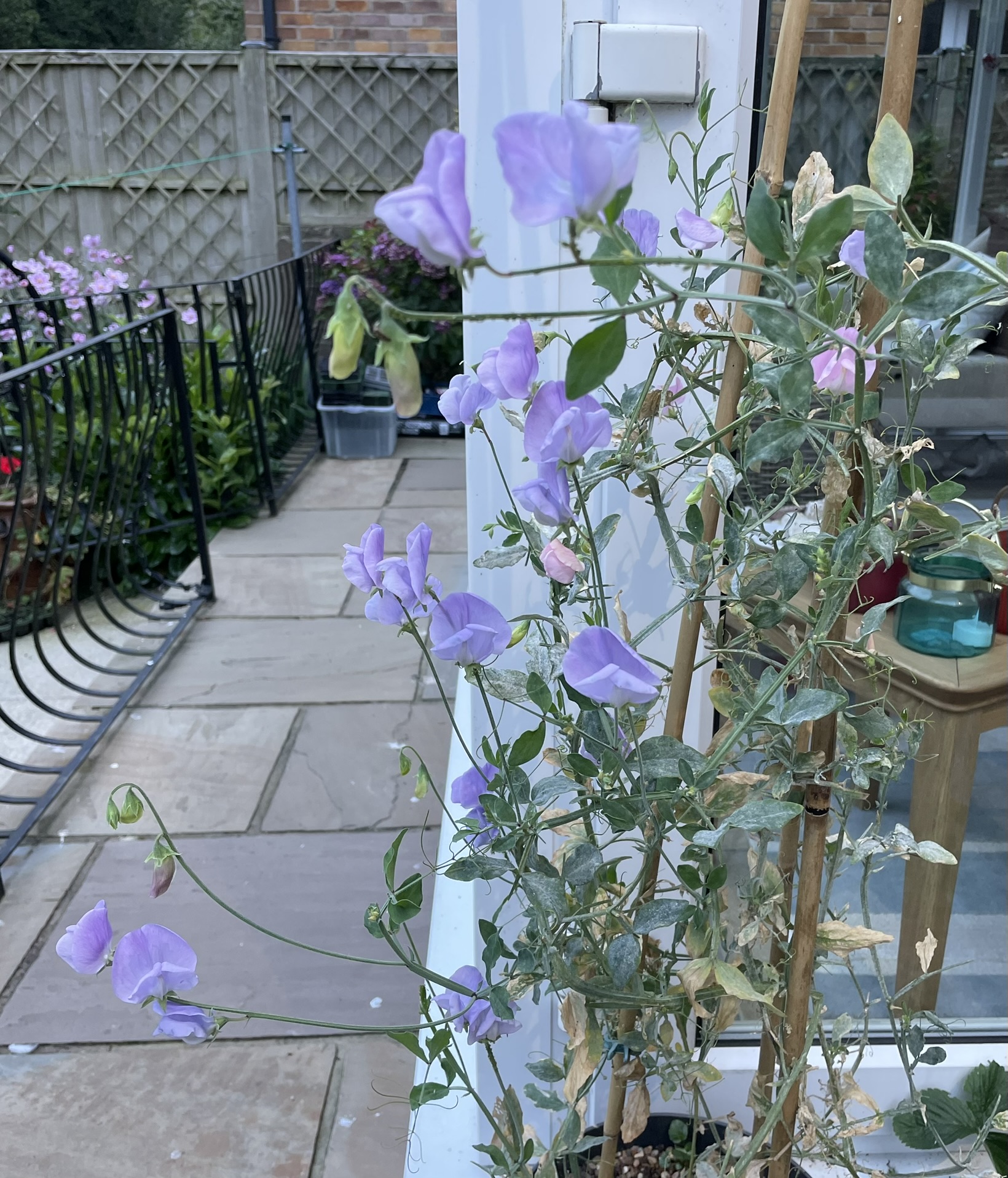
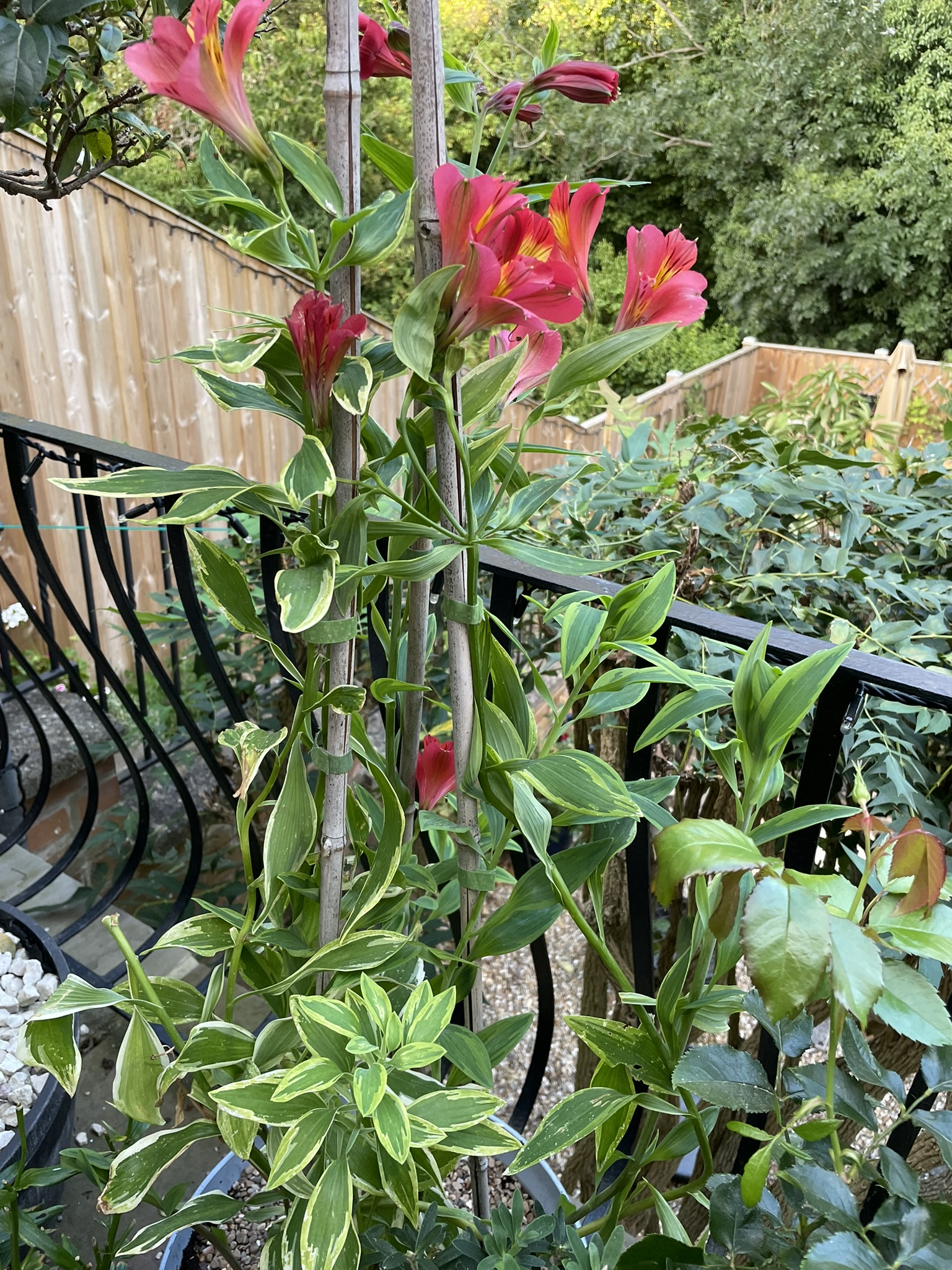
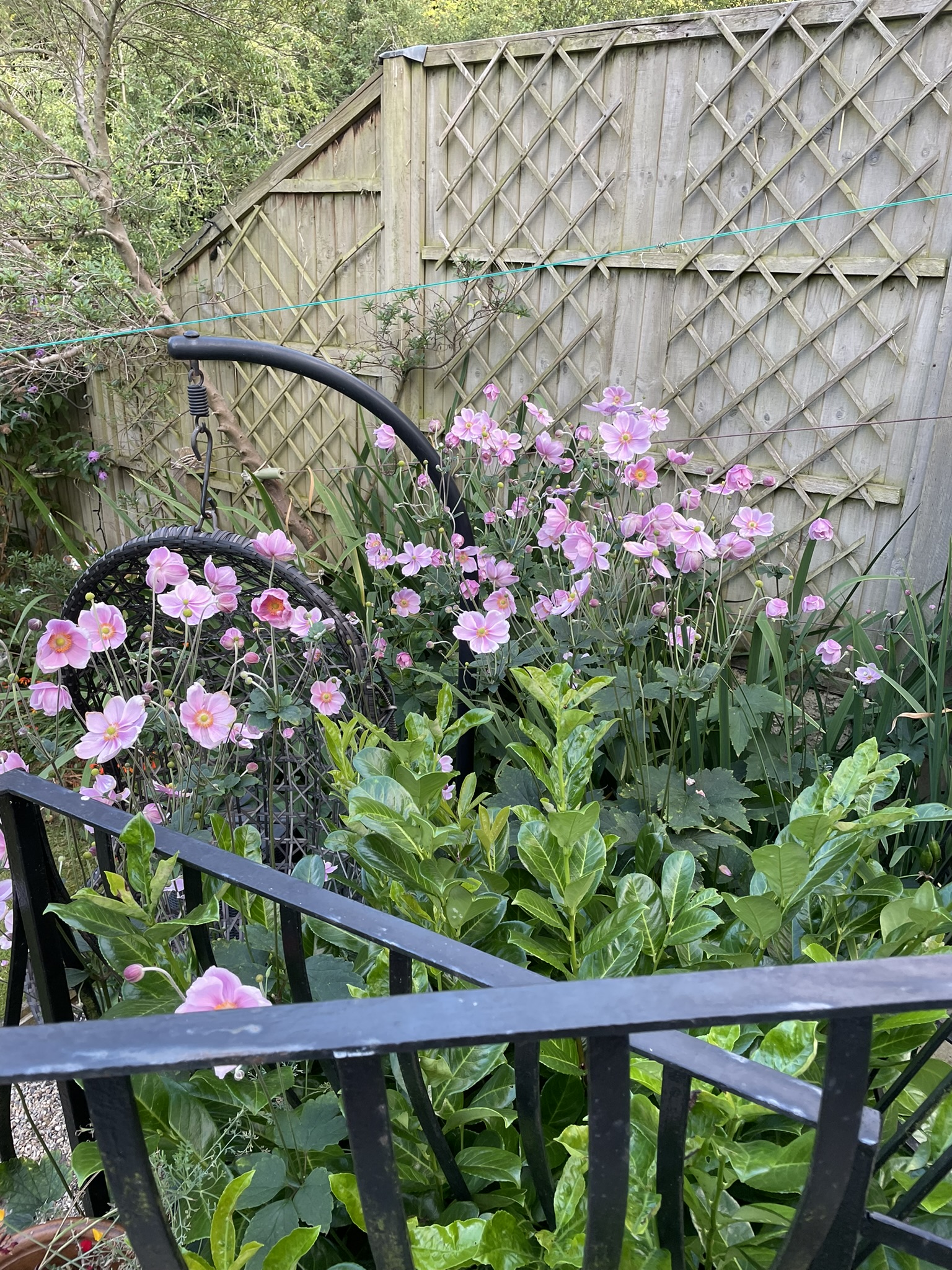
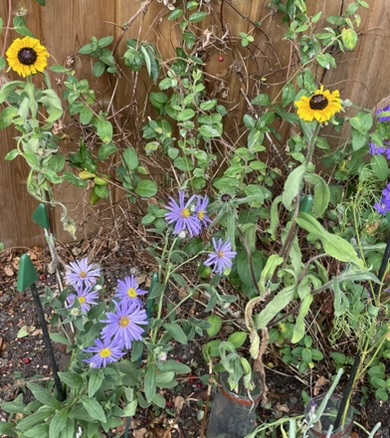
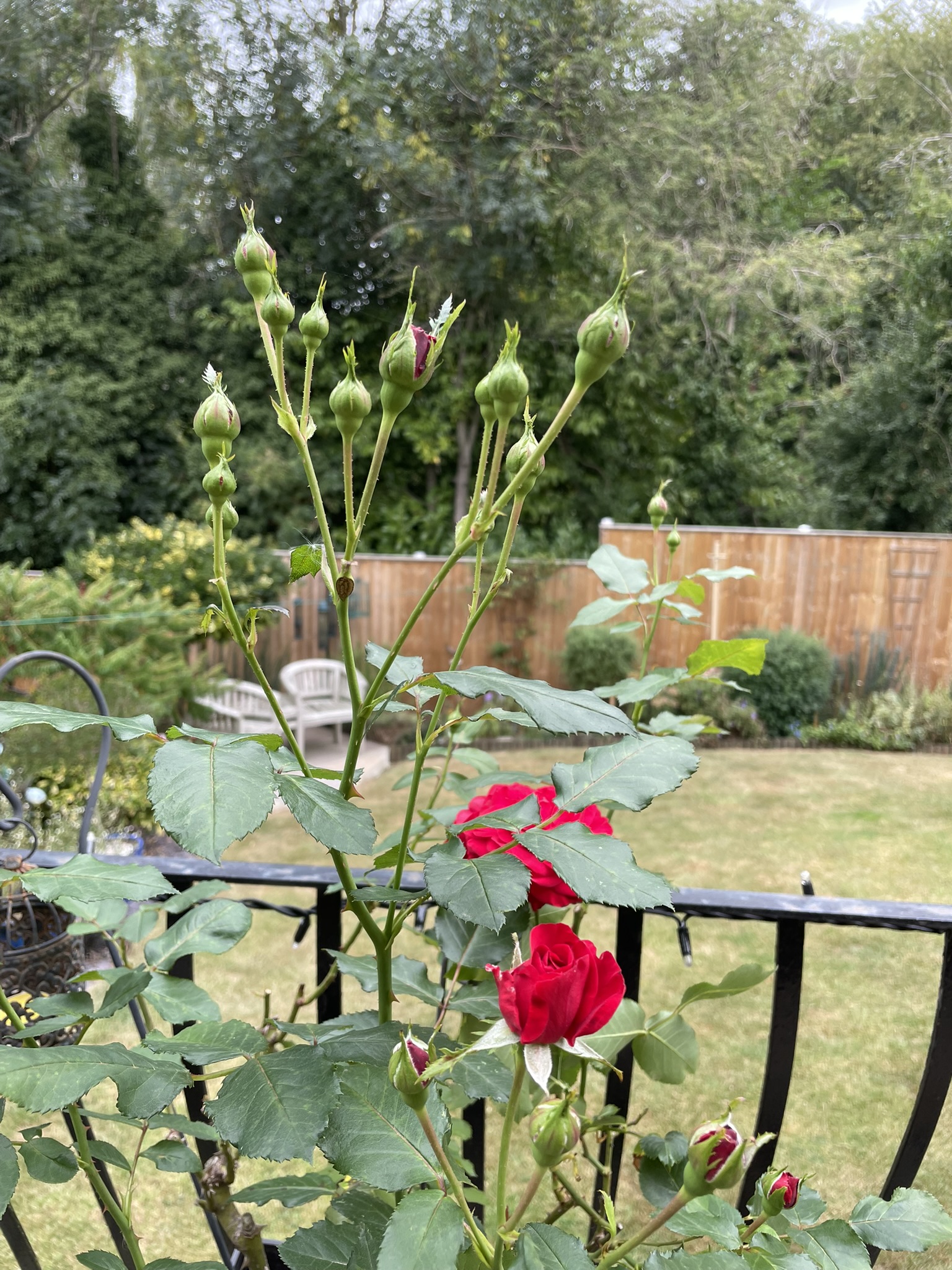
My herbaceous border is looking a bit subdued now, but the orange rudbeckias and purple aster ‘Mönch’ are now making an appearance and the sedums are colouring up nicely. A couple of my clematis are still throwing out the odd flower and the Japanese anemones are looking stunning. I was ready to pull out my sweet peas a week or so ago, but look what happened in the meantime! The geraniums (or are they pelargoniums?) are flowering away, I’ve treated myself to an alstroemeria ‘Spitfire’ and my potted roses are covered in buds again, so my terrace is going to be full of colour over the next few weeks.
I’ve really loved our long hot summer, but we do desperately need rain, and in biblical proportions over the North Yorkshire Moors – the fire fighters, farmers and all those helping to take control of the blaze must be exhausted – I hope they get some respite soon.
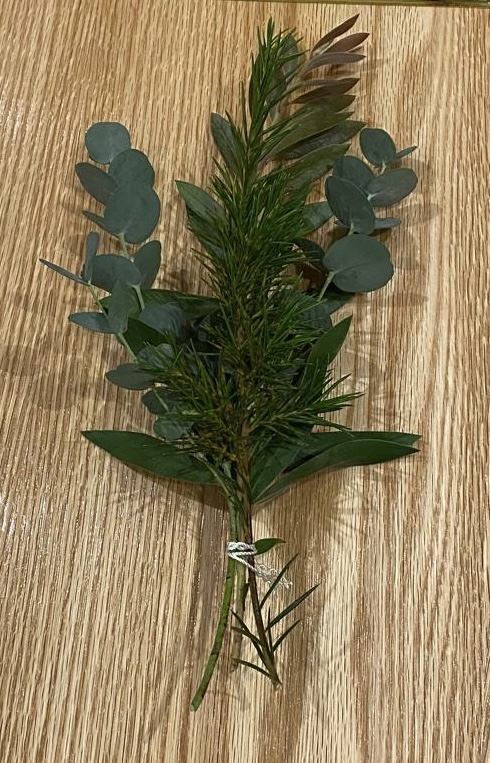
Last week I attended a funeral on the south coast. It was for my cousin who has left this world far too early. Instead of flowers, donations were requested to be made to a selection of wildlife charities. His brother travelled from America to say a final farewell to his only sibling. He wanted to dress the coffin with some flora to acknowledge the place of their birth – Australia. He sourced plants from a local garden centre – eucalyptus, bottle brush and spider flower and took a piece of foliage from each. The plants will be lovingly cared for by one of my sisters and her sister in law.
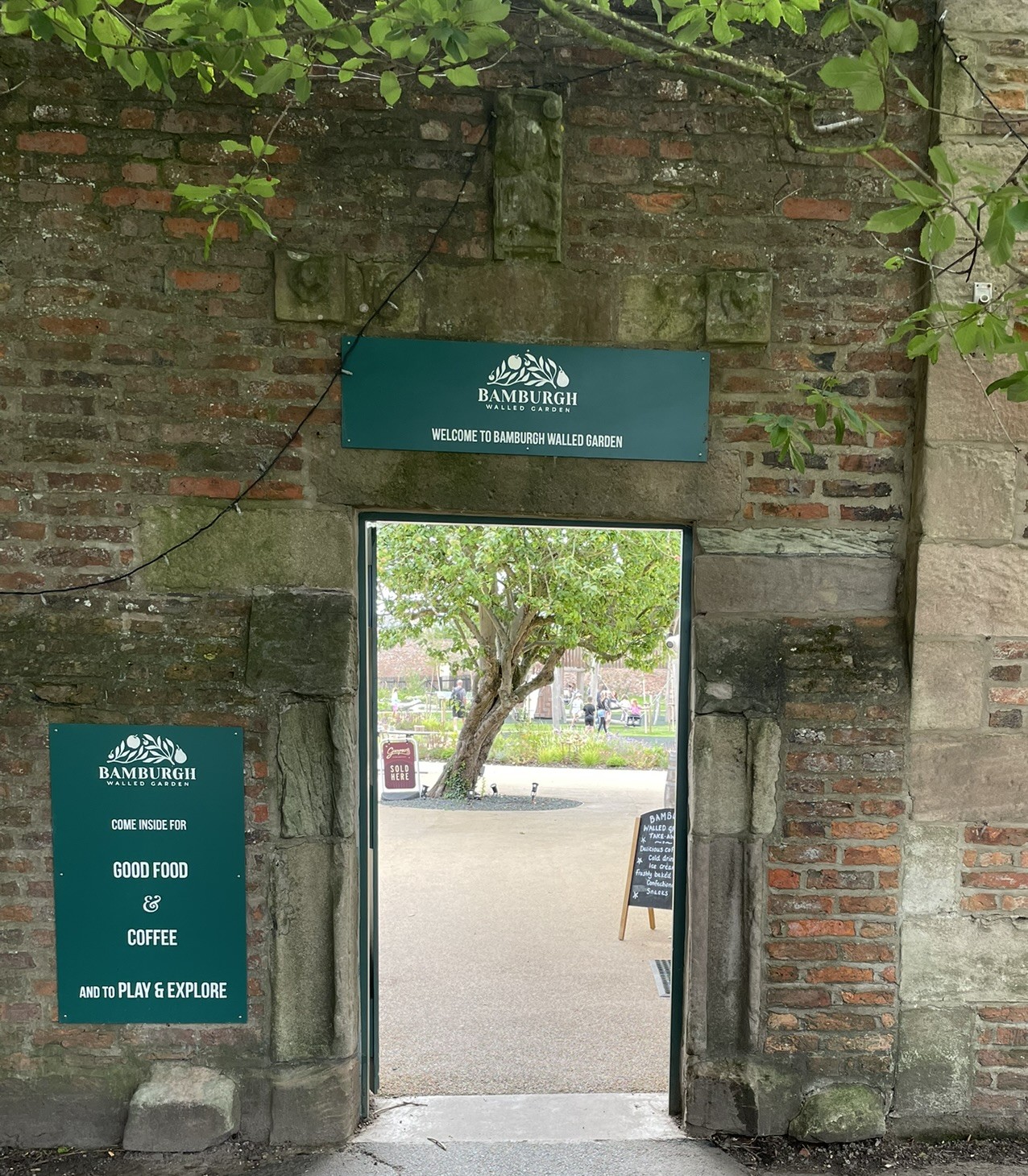
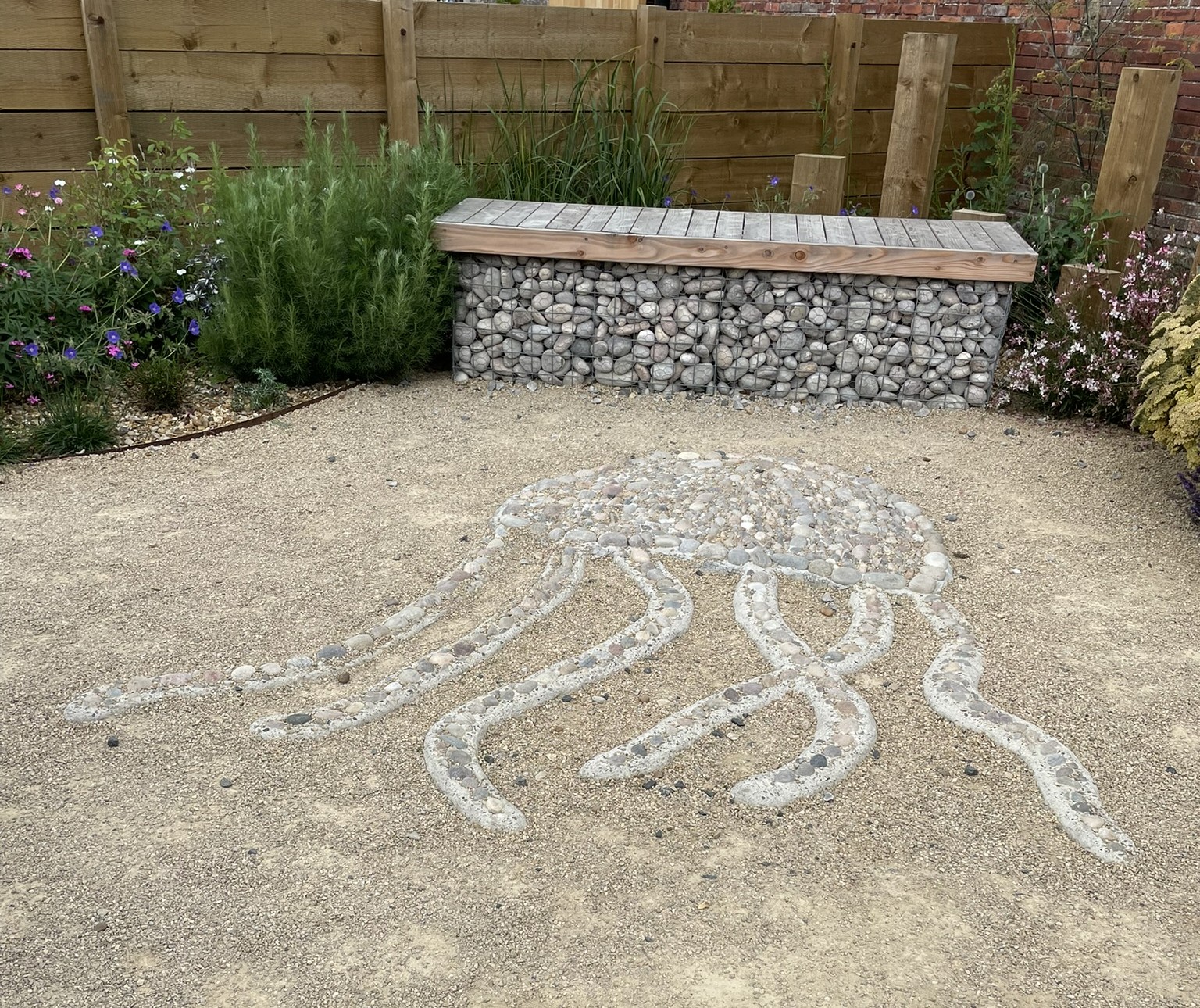
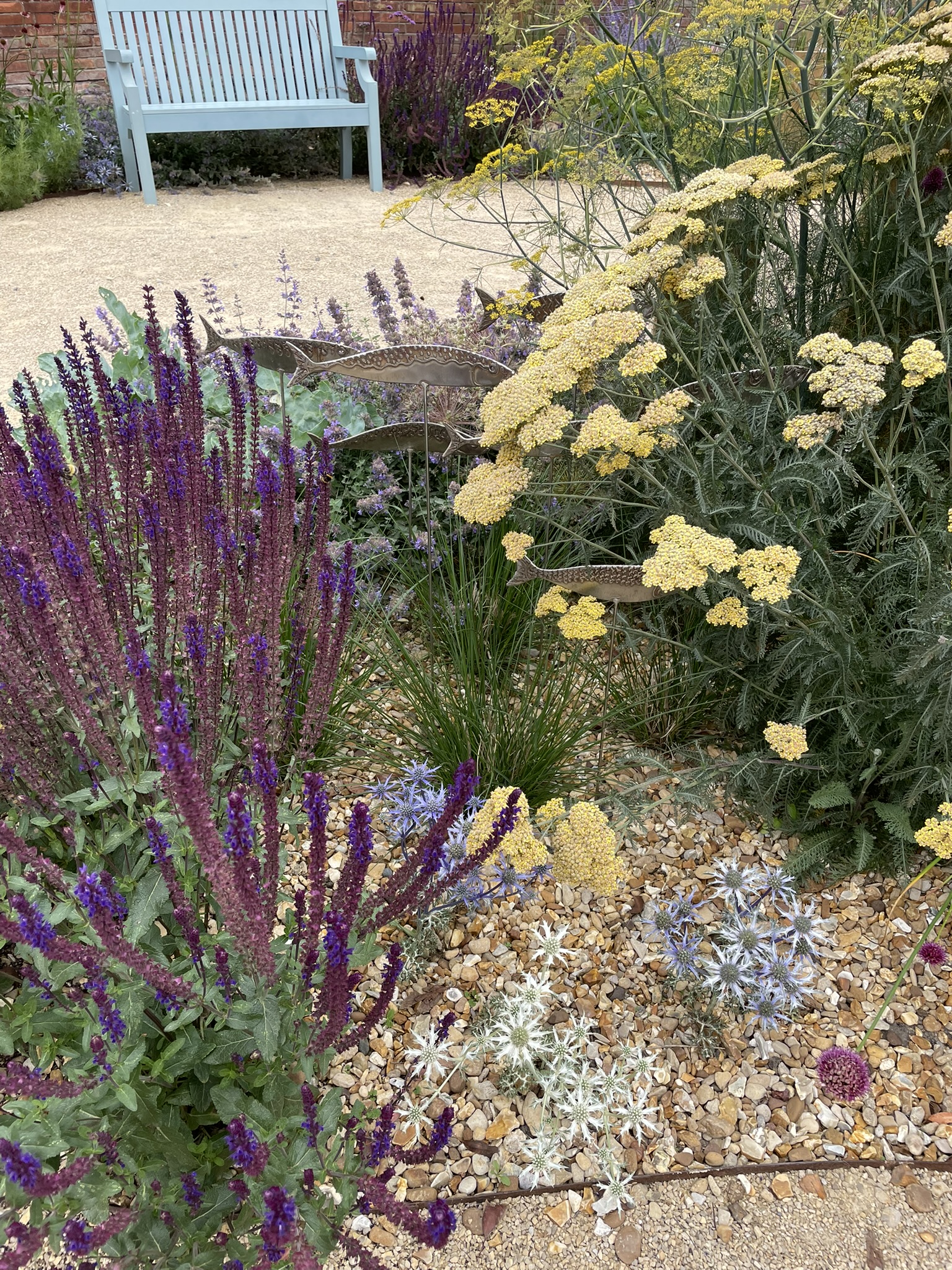
Now, as we near the end of July, I’m at the other end of the country, in Northumberland with GR and Lily. We’ve taken holidays in the area almost every year, for the past 35 years. The walled garden in Bamburgh was in a sorry state when we first visited all those years ago. In recent times it’s been closed up, but this New Year there were signs of hope that it was going to have a makeover – and on this visit we haven’t been disappointed.
The garden is part of the Bamburgh Castle Estate. The current owner, Francis Watson-Armstrong has overseen the creation of a beautiful garden within the walls, to be enjoyed free of charge all year round, by everyone. And that really does mean everyone, Francis says:
“The Walled Garden will be part of the community here in Bamburgh and contribute towards making our village an accessible and welcoming destination for local people and visitors to enjoy. Changing Places Toilets are life changing for people who use them. They give anyone – whatever their disability – the freedom to go out and about.”
Dogs are allowed in the light and airy cafe, but understandably not in the play area or surrounding stunning borders planted by garden designers Natasha and Alex McEwan. There is plenty of outdoor seating from which to admire the garden with your furry friends though.
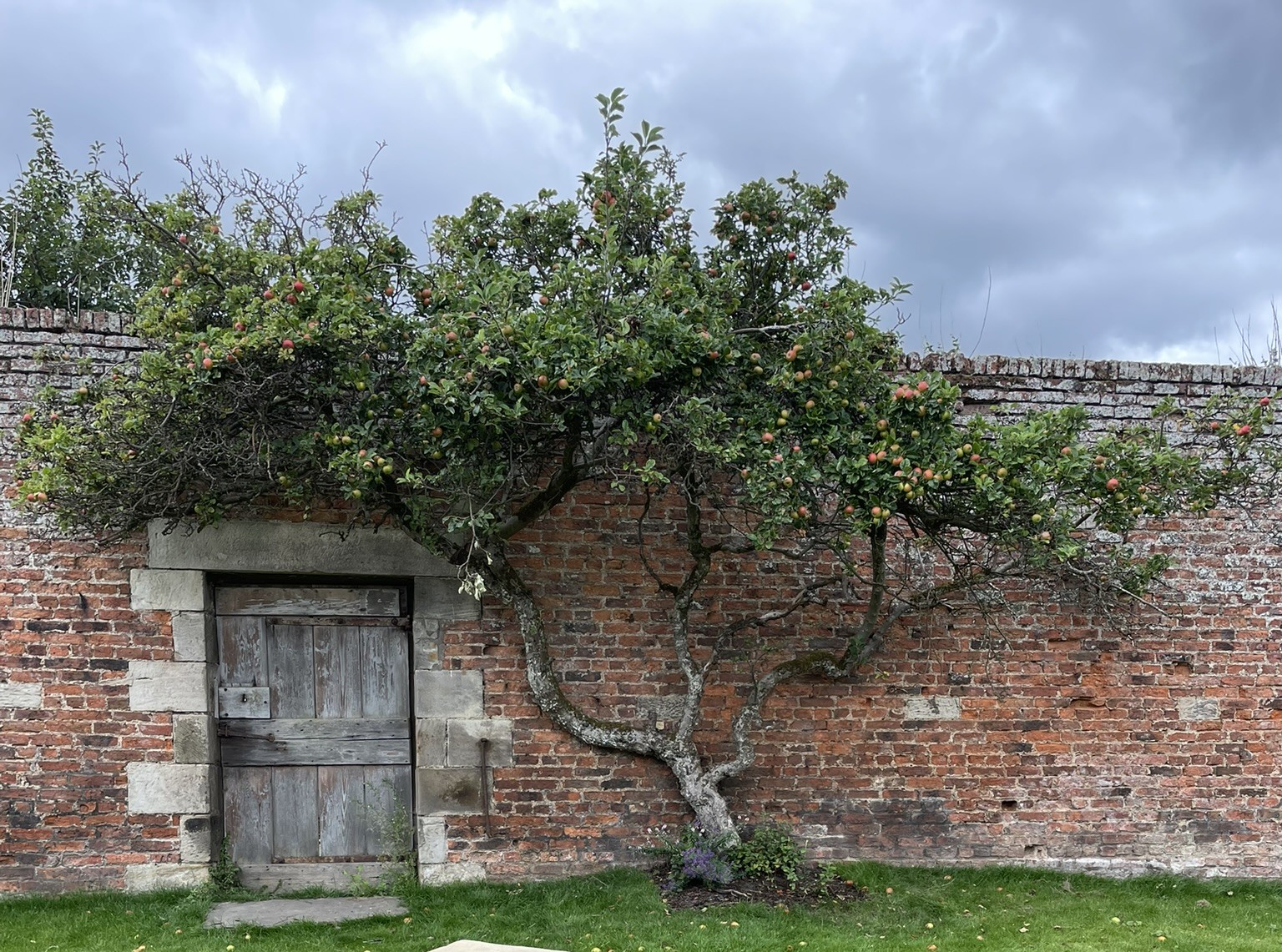
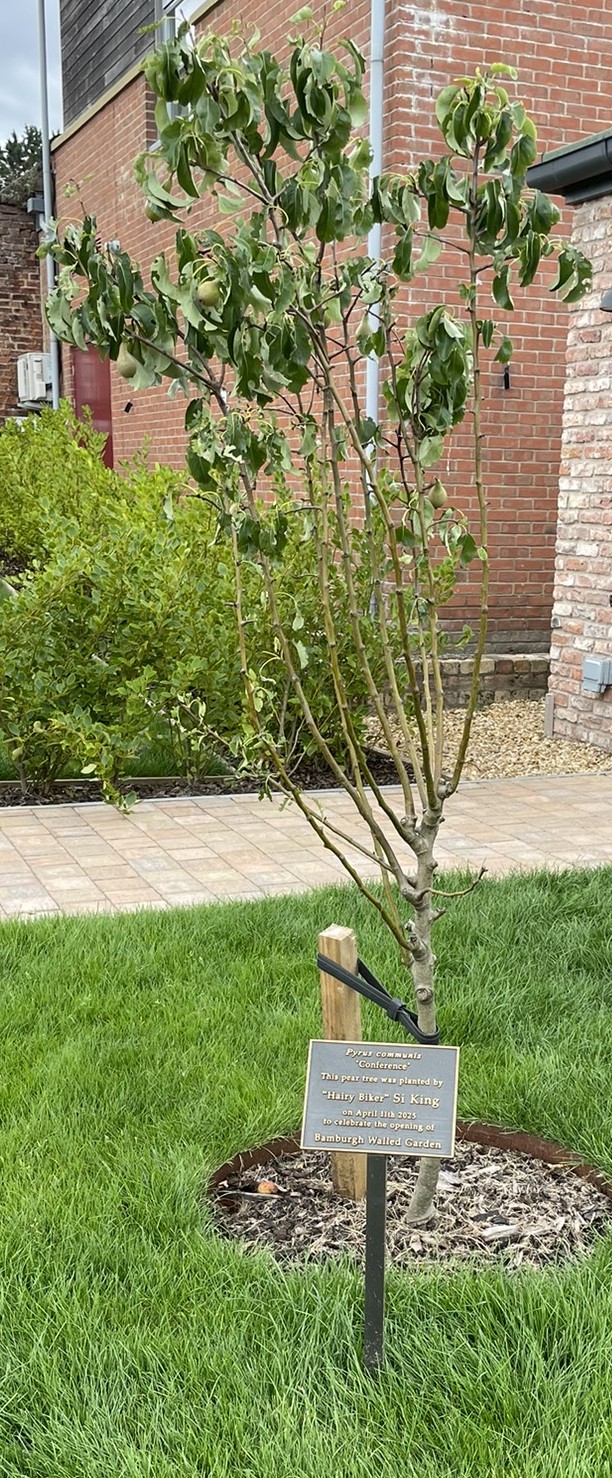
Over 30 native trees have been planted around the site and several old fruit trees remain in the garden. There’s also a young pear tree planted by Hairy Biker Si King.
Apparently there’s also an oak sapling planted by Francis, the idea being that oak trees symbolise longevity and how the garden will go from strength to strength. It was a wedding present given to him and his wife by a friend who had grown it from an acorn. I searched high and low for it but couldn’t find it – I hope it hasn’t been mistaken for a weed!
On the home front we’re in the midst of a hosepipe ban. It doesn’t really affect my gardening life because I don’t use a hosepipe to water my plants – just numerous trips with watering cans. If I can help it I don’t use tap water either. We have 8 water butts – they were nearly empty after all the lovely hot weather we’ve had, but in the nick of time the heavens opened and they’re full to the brim again. The same can’t be said for the reservoirs though.
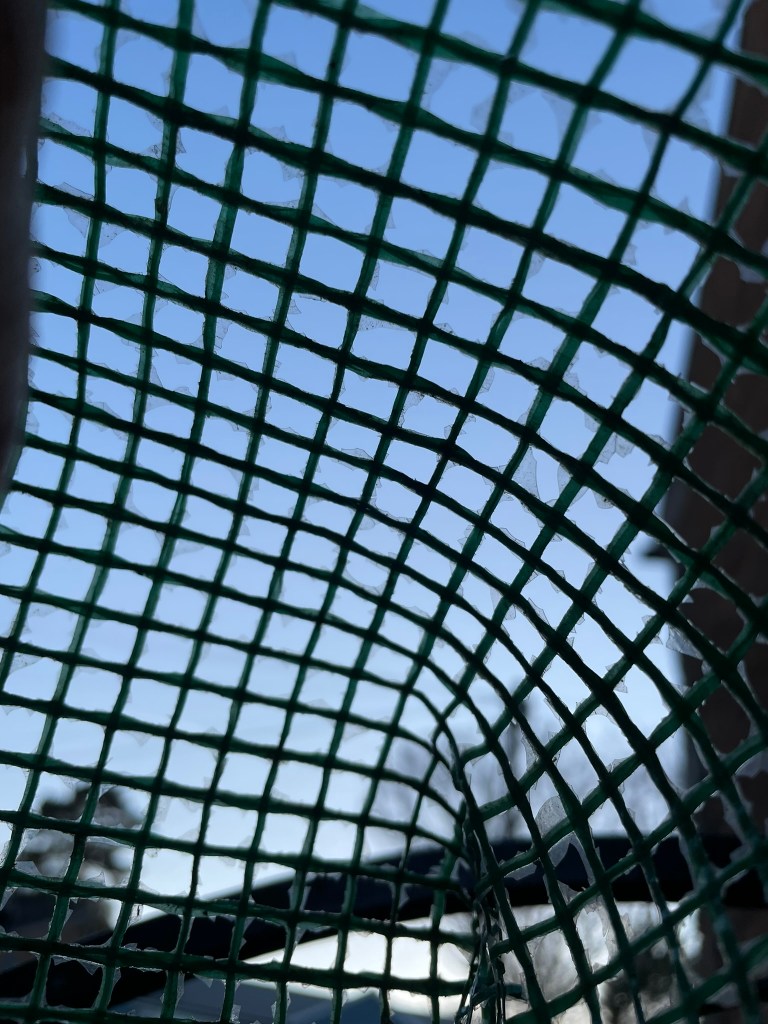
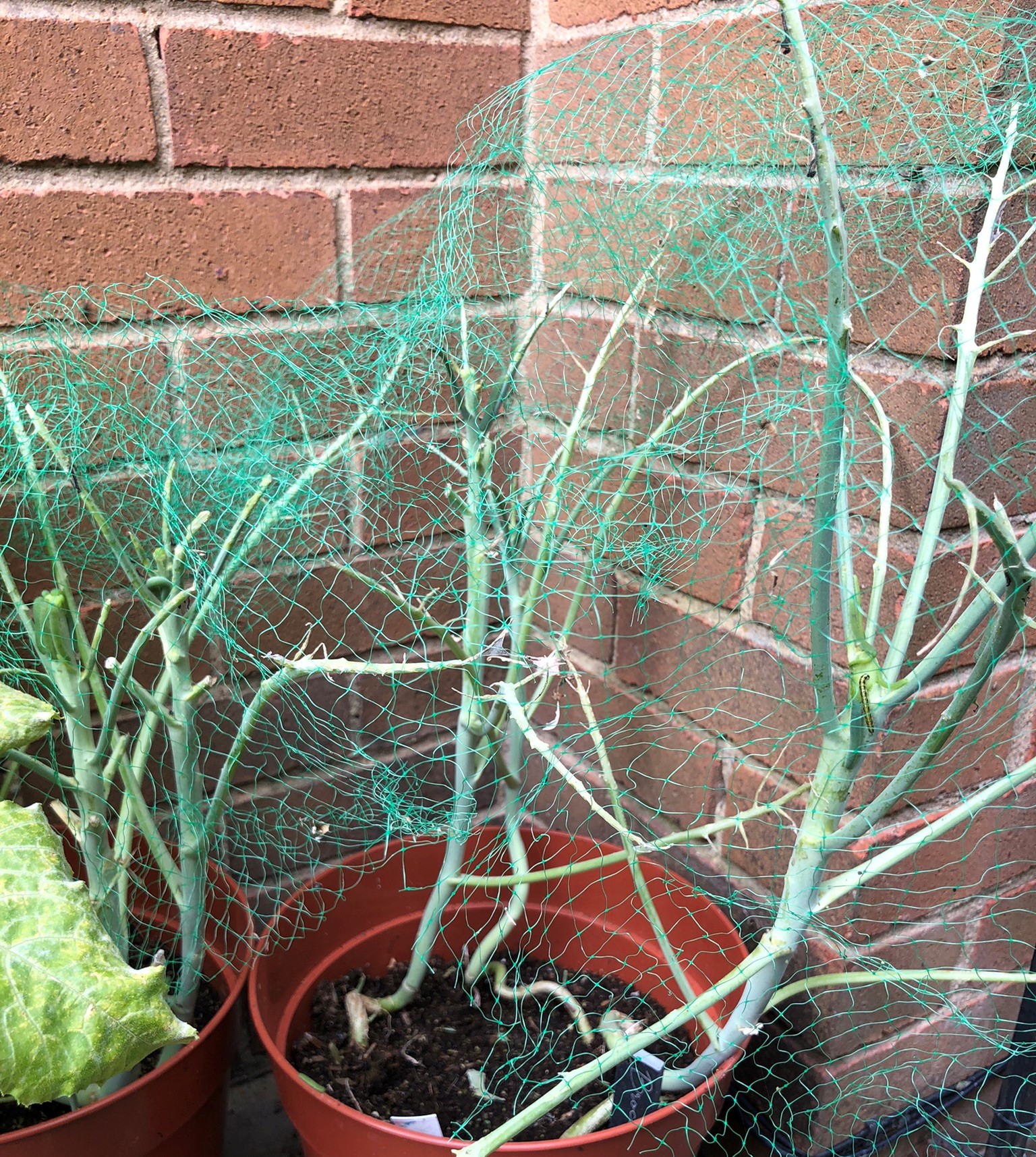
We’ve been enjoying the fruits of my labour in the form of courgettes, dwarf beans and some broccoli. They wouldn’t pass the supermarket shape tests, but they’re very tasty, which is all that matters as far as we’re concerned. There is a flaw in my cabbage white butterfly deterrent though. Firstly, the netting I’ve used isn’t fine enough so the butterflies can get inside the ‘cages’ I’ve created. I spent ages one day freeing a couple, thinking they wouldn’t be able to find their way out, only to witness later on that they are more than capable. Secondly, I hadn’t thought it through, that as the leaves grew they would touch the netting and the butterflies wouldn’t even need to get inside to lay their eggs. I’ve picked off as many caterpillars as I can, but I’m afraid there might not be much left of the leaves by the time I get home from my holiday!
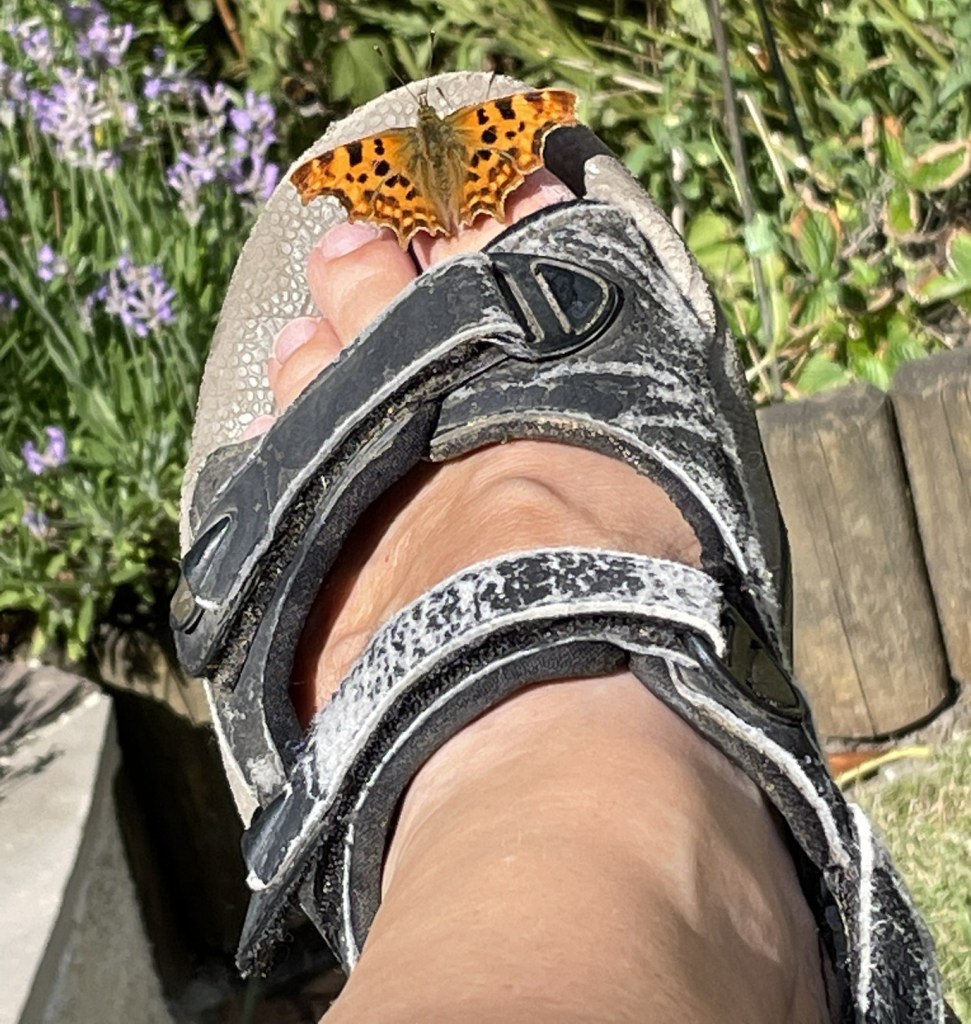
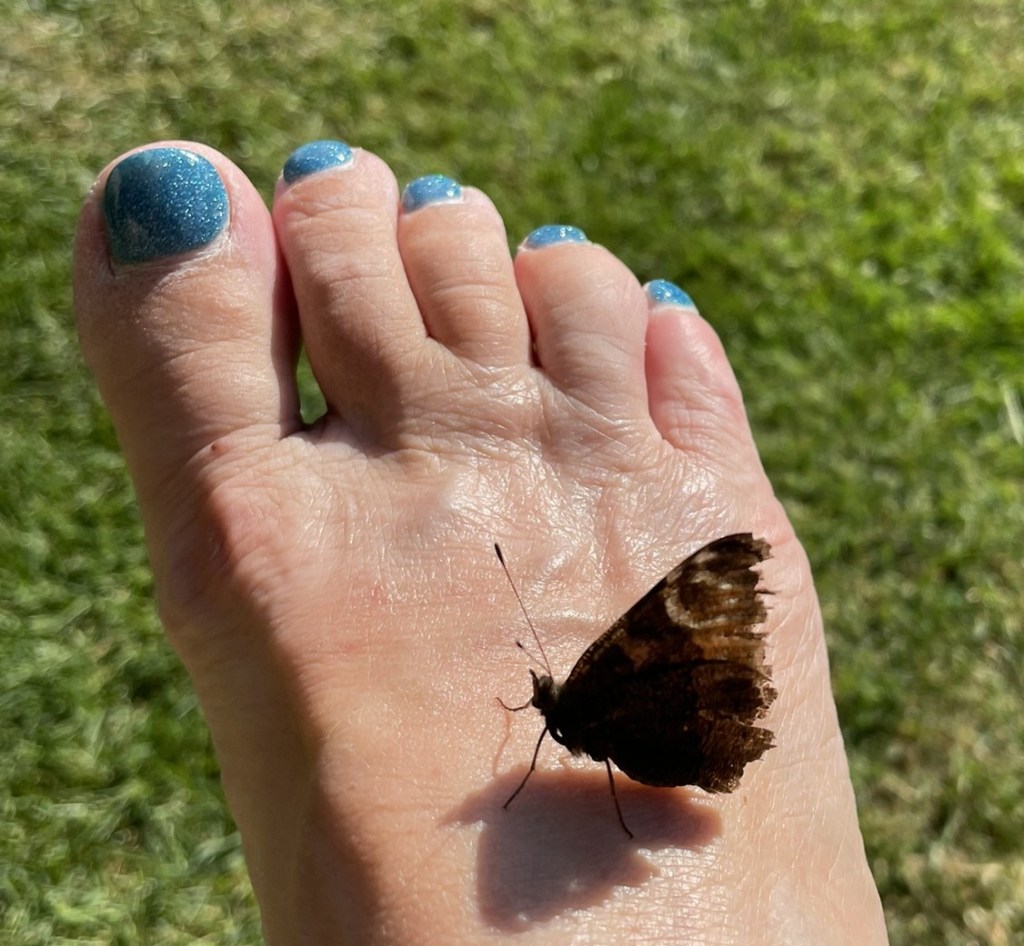
For some reason insects do seem to be attracted to me – some for the wrong reason – leaving me with unsightly, blistering bites. I don’t mind these ones though – they’re not at all aggressive – sorry about the feet and my tatty gardening sandals!
To be or not to be (a bug), that is the question. I firmly disagree with using pesticides and I try to accept that every bug in my garden has a purpose, other than destroying my plants! However I do try to minimise the damage they can inflict. The carnage caused by slugs and snails never ceases to amaze me. Look what they did to my Dwarf Beans.
I am constantly chucking them over the fence (not Victoria’s of course). Despite the saying, moving at a snail’s pace, they seem to be pretty nifty at finding their way back. This isn’t entirely a surprise. In 2010 Mrs Ruth Brooks won Amateur Scientist of the Year. She collected up snails in her garden and painted a spot of nail polish on their backs. She enlisted neighbours to do the same, each using a different colour of polish. They took the snails to some nearby wasteland and, lo and behold, the majority were found to have returned to the same garden they had been taken from. She concluded that snails have a strong homing instinct for distances up to 90 feet, but suggested to be on the safe side go for 300!
When I squidge the greenfly attacking my roses, I really do end up with green fingers, but it’s a pretty effective method of control in a smaller garden like mine. Whitefly are trickier as they tend to scatter as soon as you approach them, only to flutter back 5 minutes later. So far this year I’ve been pretty successful at foiling the attempts of lily beetles to decimate my lilies. You might remember the devastation they caused last year – click here for a reminder if you’re not of a nervous disposition. Anyway, I saw a tip on FaceBook which I half expected would turn out to be rubbish – there are so many weird and wonderful cure-alls to be found on there. However this one does seem to be working, even though it makes me sneeze! I’ve been sprinkling pepper over the leaves and on the soil beneath, and while the lily plants don’t mind, the beetles have been conspicuous by their absence. Of course you do have to reapply the pepper after it’s rained. Time will tell whether this is a genuine remedy or a fluke – I’ll keep you posted.
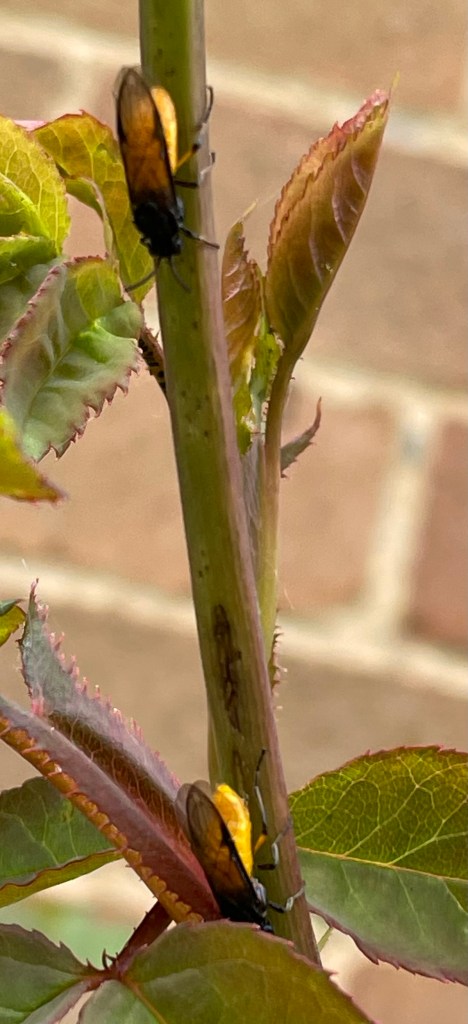
Another nemesis is the rose sawfly. Remember the damage they did to Captain Tom last year? If not, read all about it here. This year they’ve decided to target the Lady of Shalott and to date have bypassed Tom. I’ve had my beady eyes on them though, and picked them off before they had the chance to lay any eggs (I hope). Unlike lily beetles, which I have to say are clever at avoiding capture, the sawflies seem to be half asleep and easy to pluck off. Initially I tried popping them in a yogurt carton. I took them round to the front of my house and tossed them down the road (in the opposite direction to Victoria’s). The hope was they would find an alternative rose to annihilate. However, within the hour they were back, so I’m afraid it was curtains for them.
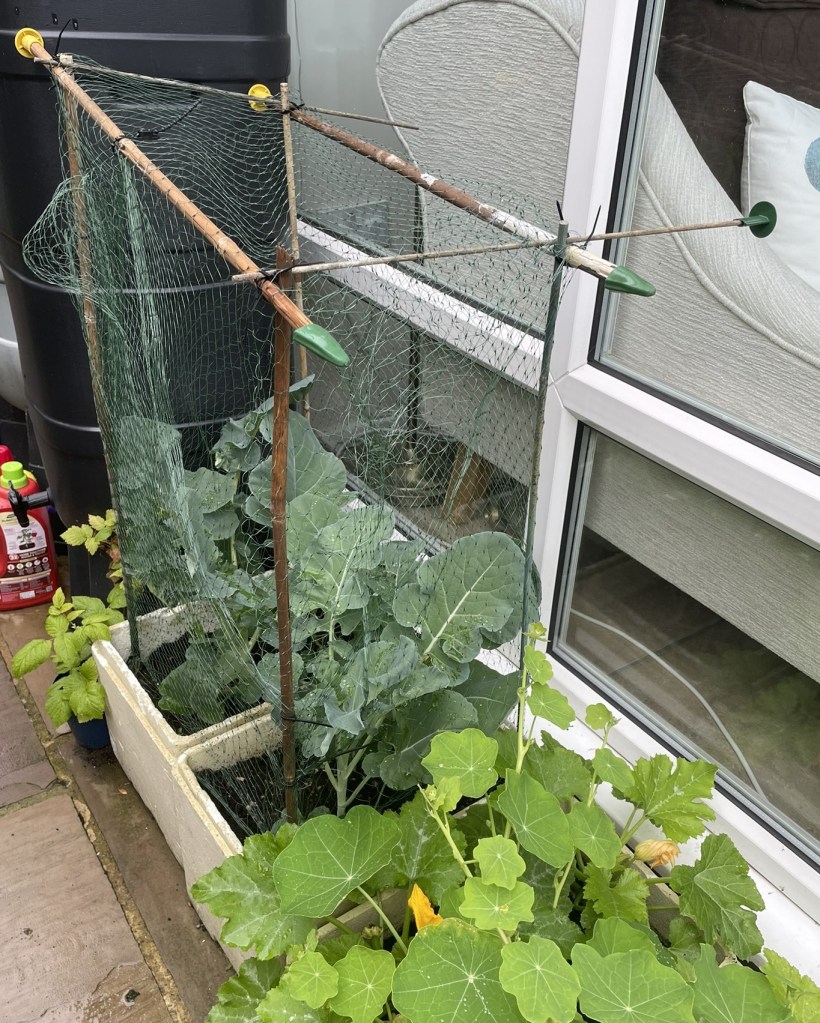
I’ve also tried to be proactive in prevention of broccoli destruction by cabbage white caterpillars – I’m still scarred by my experience 3 years ago. Now I know this looks a little Heath Robinson but don’t knock it, it seems to be doing the trick, barring a few holes munched by snails.
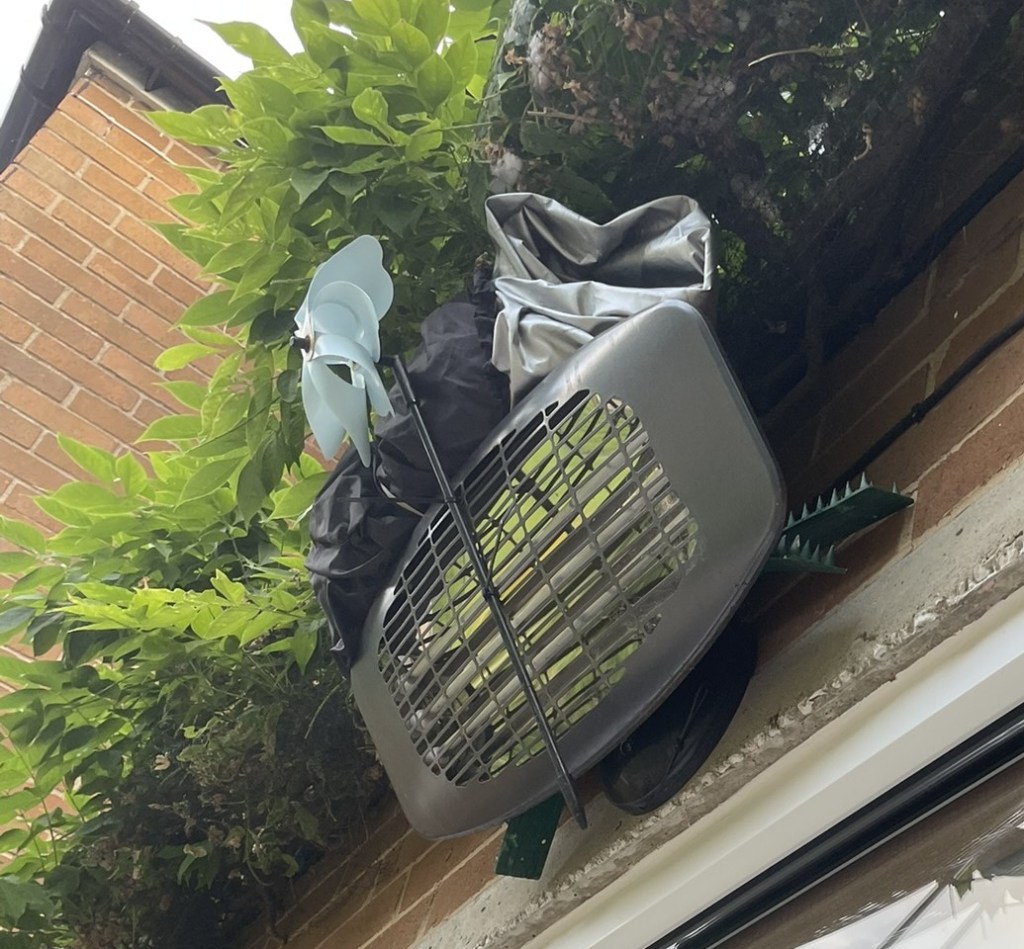
You’d think my amorous pigeon pair would be running out of lust by now, but no, all they appear to want in life, is to nest among my wisteria. Unable to do so on account of the netting, they homed in on the outdoor wall heater, just underneath the wisteria. I tried draping pigeon spikes over the heater and adding a windmill for good measure. As soon as my back was turned, there they were again, happily setting up home. I’ve now stuffed a garden chair cover behind it. Surely that will do the trick!
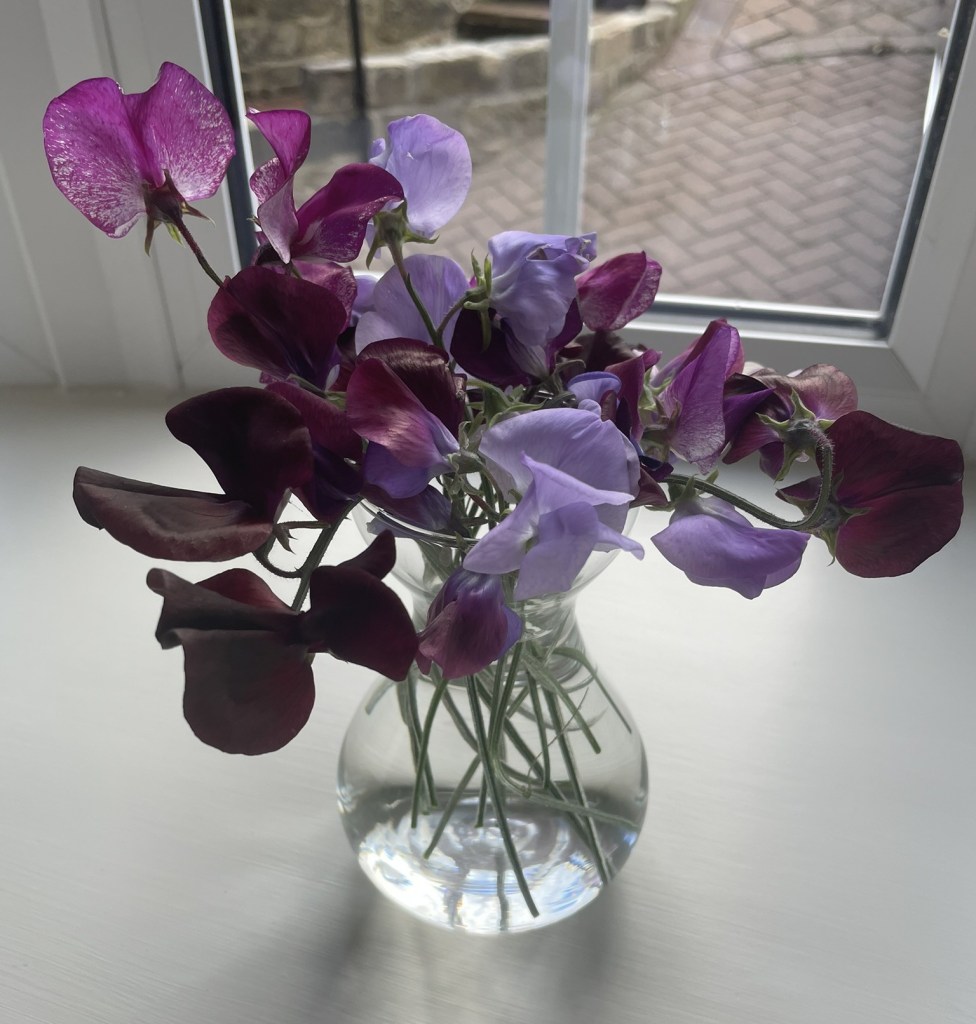
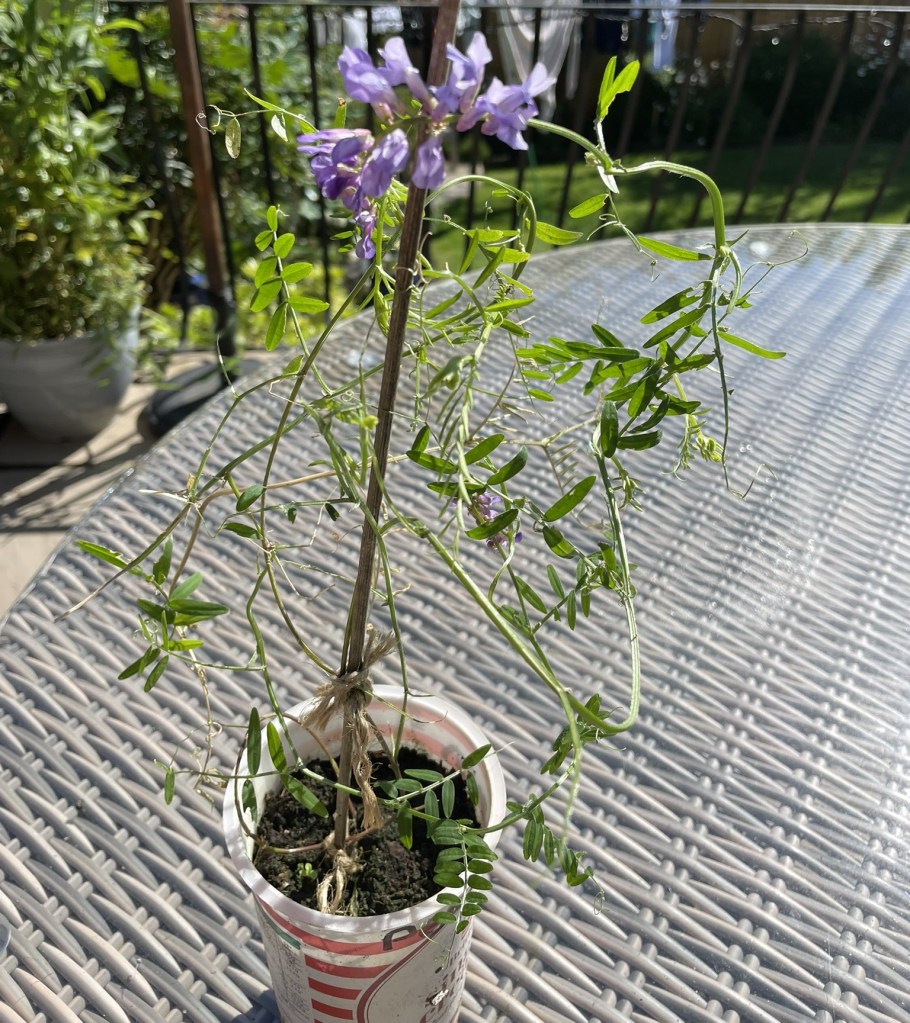
My favourite flowers at this time of year are sweet peas and fortunately my seedlings have done well, escaping any bug attacks. There’s an imposter among them though. I noticed that one of the seedlings looked very different to the rest. It turned out to be a type of vetch. Vetch is a member of the pea family and its seed does look very like a sweet pea seed. It must have found its way into the packet undetected – it’s not fooling anyone though!
A fortnight ago I set off for my hols to a small Greek island. Before I could leave I needed to give GR a lesson on watering requirements for my seedlings and some of my thirstier garden plants. His attention span is akin to that of a goldfish, but I felt safe in the knowledge that Victoria would also be watching over my garden, and taking over watering duties while GR was away working. Being an avid gardener herself she knows what to do without being told.
My holiday was simply wonderful. I spent time catching up with my friends, while we ate delicious food at a leisurely pace and drank copious quantities of local wine and ouzo. We swam in the turquoise sea, which being only May was a tad bracing, but so relaxing once you’d gone numb. The water was so clear you could see fish of various sizes without the need for a snorkel and mask.
There were swallows everywhere, darting in and out of tavernas and balancing on overhead cables. It was a joy to see so many – they were too quick to capture with my phone camera, so the best I could do was a nest.
We had good walks most days – admittedly this involved a visit to a taverna for refreshments at some point along the way. We strolled past beautiful gardens brimming with colourful flowers such as bougainvillea, hibiscus, amaryllis, roses and oleander. There was a heady mix of fragrances in the air from the likes of jasmine, honeysuckle and a new one on me, the chinaberry tree – commonly known as cape lilac. There was one growing just below my apartment and every morning when I stepped out onto the terrace, I was hit by its wonderful scent.
Everywhere I looked there were wildflowers – from the rough roadside verges to what could only be described as entire meadows. May is the perfect time to see this spectacle, as it will all be burnt to a frazzle in a month or so, once the weather hots up.
Sadly holidays have to come to an end. I did consider doing a Shirley Valentine and getting a job in a taverna so I could stay on, until I was reminded that due to Brexit I couldn’t do so (not legally anyway). I also knew I would miss Rosie, Daisy, Little Bud and Lily too much, oh and GR of course. You may remember Shirley had a rock she talked to – I had a rock too, but I sunbathed on mine – luckily there’s no photographic evidence of that!
After a long day travelling by ferry, car, plane and train, I have to say I was bowled over by the sight of my garden after ten days away. Everything had taken off. Most of the wooden posts I told you about in my last blog are now hidden by foliage and there’s more growth yet to come. There have been one or two casualties in the seedling department but that’s not down to GR and Victoria, slugs and snails being the culprits. Most are looking promising and I need to start planting them out into their final growing spots.
Mr and Mrs BT are now busily feeding their needy and very vocal brood. We are also being woken in the early hours by a family of cackling magpies – not my favourite garden visitors, but the antics of the young ones are amusing to watch. I see there are a number of names given to a group of magpies, the most common seeming to be a mischief. I sincerely hope it is only mischief they get up to and that they don’t have their beady eyes on my blue tit family.
I’ll leave you with a photo of my bottom border – if you want to see the before version click here – sorry to go on about it, but I’m really chuffed with the outcome of my two netting experiments …
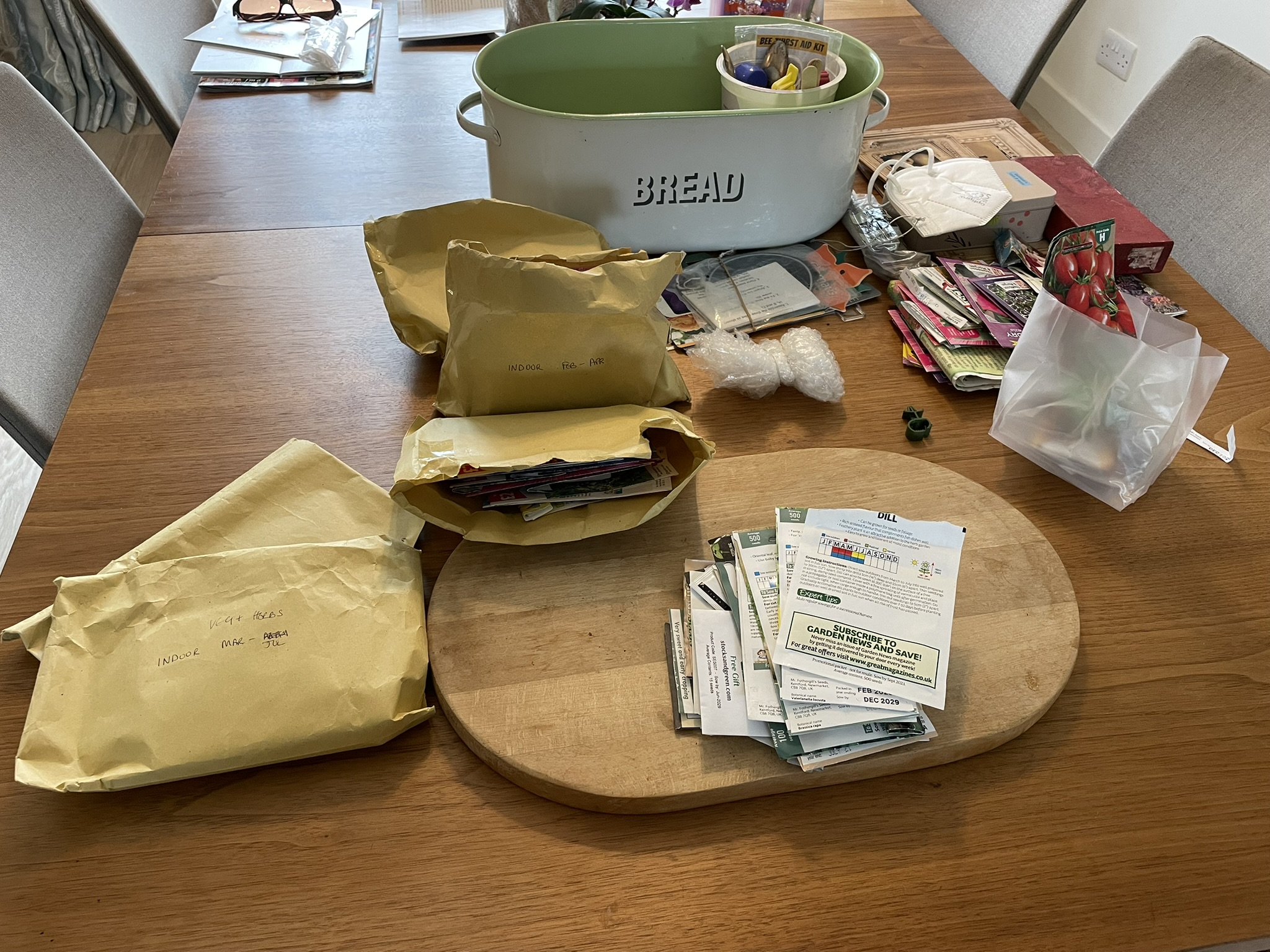
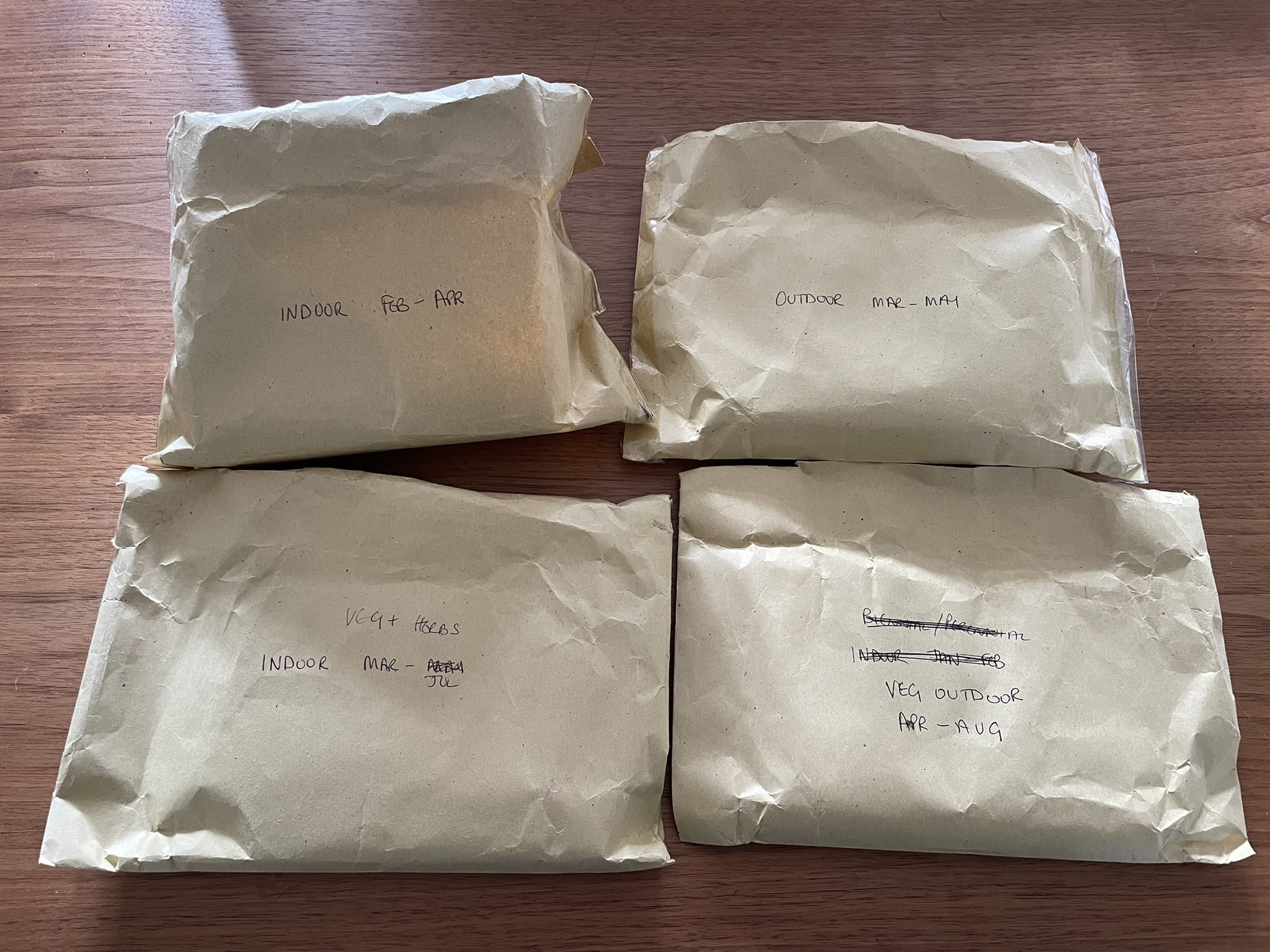
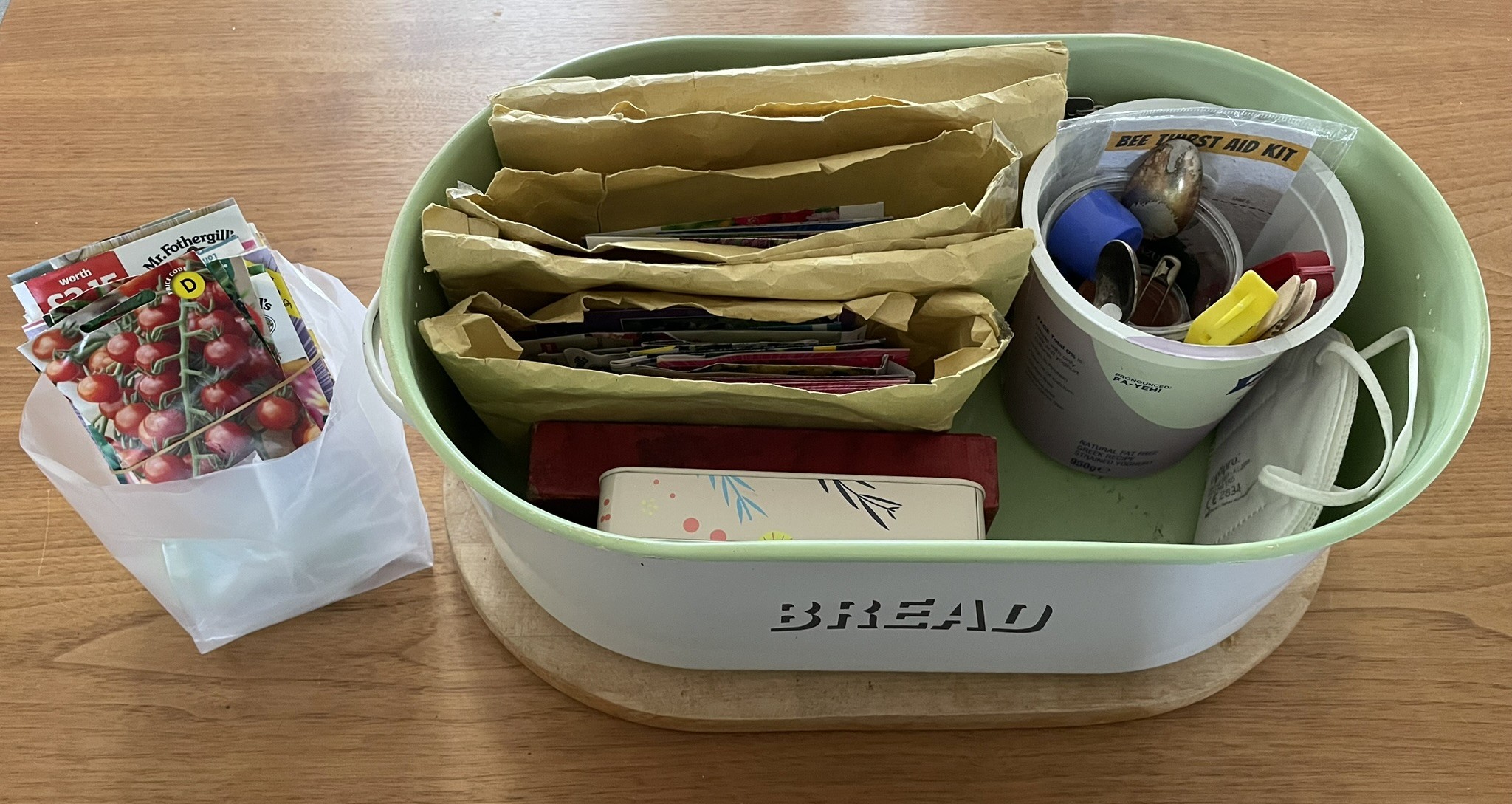
What wonderful weather we’ve been enjoying these past few weeks – I hope this doesn’t mean a disappointing summer though. Mind you today’s rain is much needed – the ground is looking very dry already. I was determined to be more restrained with my seed sowing this year but it all went a bit wrong. I did make ‘definite’ and ‘maybe’ piles of seed packets, but somehow things got out of hand! GR will be cursing me because he’s going to have to water them all while I’m away on my hols – you could look upon it as payback time for his 6 week absence on the ski slopes of Europe and Canada!
It’s so good to be back out in the garden for extended periods, without needing to wear all my clothes. I’ve been busy preparing for summer and enjoying seeing what is bursting into life in my garden. Last year I planted a lot of perennials in my bottom border (72 to be precise), after it was annihilated due to the installation of a new fence – you can read more about that here. I’m seeing new growth daily, but I have to look up what some of the plants are. I thought I would be able to tell from the planting plan that came with them, but I did deviate from it and I do remember there were some substitutes which I failed to record. Anyway, it will hopefully be a nice surprise!
Last year I went to the Harrogate Autumn Flower show, which is held at Newby Hall near Ripon. I had such a lovely day with my friends, which included a tour of the stunning garden, led by their Head Gardener, no less. One idea I was really struck with was the netting system they use to support plants in their herbaceous borders. It all just looked so natural. The wide gauge netting was attached horizontally onto wooden posts to form a framework. Every year I struggle with staking plants. I start with my shorter supports, but then plants like the ox-eye daisies, large lupins and sedums go mad and I have to to put in taller ones. Unfortunately this often looks rather contrived and I’m never quite satisfied with the look. So I decided to trial Newby Hall’s idea. I bought some quite substantial wooden posts like theirs, which I tried to hammer into the ground, but my pathetic attempts meant they weren’t very sturdy. No matter, this was where GR came in handy with our sledgehammer, which I can barely lift, never mind do anything useful with. Just to digress a minute, I started wondering why it’s called a sledgehammer – after all you could wreck a sledge with one in seconds. Apparently the ‘sledge’ bit is derived from the Old-English “slægan”, which means “to strike violently” – so there’s your fascinating fact for today!
My next task was to source the appropriate netting. I looked online and in garden centres but everything seemed too fine or not substantial enough or too pricey. So I emailed Newby Hall and I was really impressed to receive a prompt response from Lawrence Wright, the Head Gardener. The netting they use comes from Knowle Nets – they were really helpful and even reduced their standard postage for me, because they normally supply netting in gargantuan proportions, to the likes of Newby Hall and plant nurseries. Now granted, it doesn’t look the most attractive at the moment, but I’m hoping that as the plants start to fill out, the posts will be disguised a bit.
A few days after I had set it all up I came across an online video by Sarah Raven. She uses willow twigs as opposed to stocky posts, so hers all looks very sophisticated compared to mine. They probably would blend in better, although I’m not sure how sturdy they would be, because you do need to make sure the netting is really taut. Anyway, after a few weeks of growth, I think it’s working – some of the plants are already making their way through the netting and they’ve got a lot more growing to do yet. It’s all a bit of trial and error, but I’ll look and learn ready for next year. A question asked on our Newby Hall tour was, how do the gardeners weed once the netting is in. The answer is they crawl underneath. Thankfully I can still get down onto my hands and knees and my border is on a slightly smaller scale to theirs. Actually, I’ve just had another thought, Little Bud is on the verge of crawling, so I could send him in!
I’ve had a bit of a netting frenzy this month, in that I’ve used a finer kind for a different purpose. You may remember my pigeon nesting issues over the last couple of years – if not, or you want a refresh, have a look here. This year I decided to act before any amorous shenanigans ensued and while my wisteria was still bare of foliage. I draped netting across it so that the pigeons can’t land on the branches and build a nest. My only worry is whether the foliage will grow sufficiently long to poke its way through the netting, allowing the flowers to hang as they should, rather than being trapped inside it. I’ll let you know!
By the way, Mr & Mrs BT are back, busily building a nest in the tit box! Well, I’m assuming they’re the original pair. Victoria has done some research – they can live up to 4 years, so I like to think it’s them. I have noticed that one of them, let’s assume Mr BT, is trialling a speedier approach to nest building this year. On two occasions I’ve seen him take in items that weighed him down so much he had to land mid flight and try again – a very long piece of wool and a large feather – maybe he didn’t have to learn proverbs at school – more haste less speed Mr BT!
What an interesting time I’ve had this month observing a wide variety of plants and creatures! Rosie, Daisy, Little Bud and I set out for a walk in Manor Heath Park, Halifax. Minutes into our stroll the heavens opened, so we took cover in a jungle – The Jungle Experience to be precise. Little Bud was entranced by the fish and the terrapins – they looked a bit like me on a beach holiday. First they would take a little dip and then clamber onto their sun rocks for a long snooze.
There are usually lots of tropical butterflies to see, but because it was such a dull day they were elusive, so we only spied one. There is an amazing array of plants to enjoy – Bird of Paradise, tropical water lilies, orchids, banana plants, to name but a few. If you visit Halifax, maybe on a Gentleman Jack visit to Shibden Hall, which is well worth a visit too (you may remember Anne Reid and Derek Jacobi got locked in there in an episode of Last Tango in Halifax), take a detour to the Jungle Experience – entry is only £1 and it’s set in a lovely park (if it’s not raining).
A few weeks later we had a family visit to Hardcastle Crags (National Trust) near Hebden Bridge. This time we were blessed with blue skies and sunshine – oh, and the presence of GR, who had made a fleeting appearance between ski trips. We walked through the trees to Gibson Mill, a former cotton mill. Just to the edge of the impressive Mill Pond is a swampy area. We were lucky enough to find that it was full of croaking frogs and frog spawn – it was quite a sight and sound! Sorry about the quality of the photos, but if you get a magnifying glass out, you should be able to see them.
The night before our visit to Halifax we hadn’t slept well, on account of a loud gurgling sound that started in the early hours of the morning. On staggering downstairs, bleary eyed, we deduced it was coming from our boiler. It had in fact gone out the previous night, but GR did something and it came back to life. So, on the way to Halifax, I phoned our heating engineers. The receptionist asked if we had turned the boiler off? No, GR had turned the heating down though. I could sense the attempt she made to control her alarm. She suggested we turn it off. Hmm, we’re away for a couple of days now. No problem though – the lovely Victoria came to the rescue, disarmed our alarm and our boiler, so all was safe. On our return an engineer came out, and on taking the cover off the boiler, instantly detected the culprit. Apparently in a boiler there is a thing that catches any grit etc from the condensed water (that might not be strictly technically correct, but it’s the best I can do). Anyway, as well as grit there was a fairly substantial orange object in there. What on earth it is and how it got there, we can only hazard a guess at – looks vile doesn’t it? A carrot? or the engineer suggested a hot dog. How the hell it got there is a puzzle. The boiler has a kind of periscopey thing that protrudes from the outside wall, from which water drips (it’s supposed to). We can only think that a squirrel, or a mouse or a bird has shoved the orange thing in there for safekeeping and it’s worked its way down to the grit trap area. If you’ve got any ideas as to what it is or how it got there – answers on a postcard please. We’re now waiting for the bill 😦
Last weekend I joined 7 women in a cosy cabin to be taught by Lucy Chaplin how to be hookers! Now I know some of you will be jumping to conclusions, but let’s just take a reality check here. I don’t think in my advanced years there would be any income to be made from selling my favours! Of course you may already be aware that once you can master the basics of crochet, you can proudly call yourself a hooker. The cosy cabin is home to the Loop De Loop Studio, known as the Den of Yarniquity, and is based at the award winning Yarn Etc wool shop on Knaresborough Road, Harrogate.
We were all crochet virgins, but with the benefit of Lucy’s patience and guidance, we spent 3 hours mastering crochet stitches – mainly chains and trebles. By the end of the session we had all completed a kind of sampler.
When I got home I couldn’t wait to practise my newfound skill. But what to make? Well, I thought, as a keen gardener, flowers should come into it. I consulted an amazing website recommended by Lucy – Attic 24 – owned by another Lucy, and another Yorkshire based business. I homed in on a pattern for a hellebore flower – seasonal I thought. I nearly gave up on the first petal – there were a few more stitches involved than I had in my repertoire – double crochet, double crochet decrease and half treble. However there were clear instructions and photos, so eventually after quite a bit of unravelling and swearing, my first petal materialised. There was no stopping me – another 4 and some woolly stamens later and I had something sort of resembling a Christmas Rose.
It came to mind while I was hooking that there will be many bouquets of flowers in circulation this week. Regular followers may recall that GR and I met on Valentine’s Day, many moons ago. We’ll not be celebrating together this year (again) because yes, you guessed it, he’s away skiing the Matterhorn and other such freezing cold places. I will be babysitting the newest love of my life, Little Bud, while Rosie and Daisy go out for a meal.
Thoughts of Valentine’s Day made me think I should add a heart to my flower – so I tackled another Attic 24 pattern. Yes, I know it’s a bit lopsided, but I’m pretty proud of it nonetheless.